After the rain: Material flow
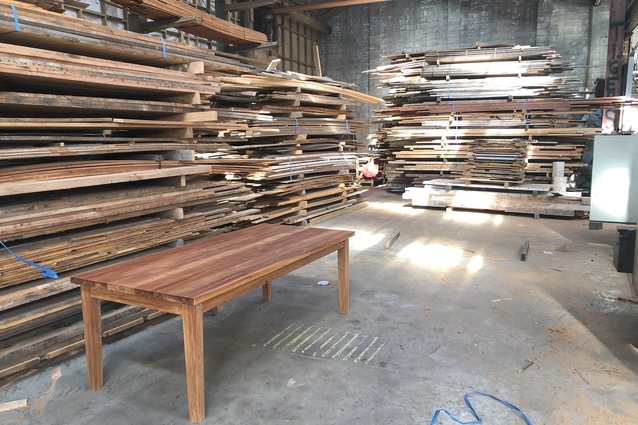
Native timbers harvested for re-use.
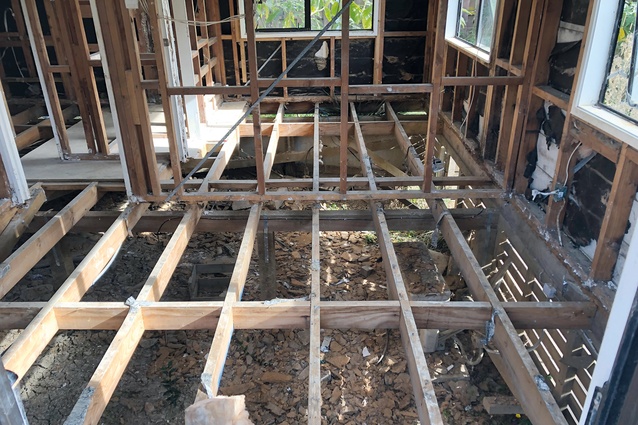
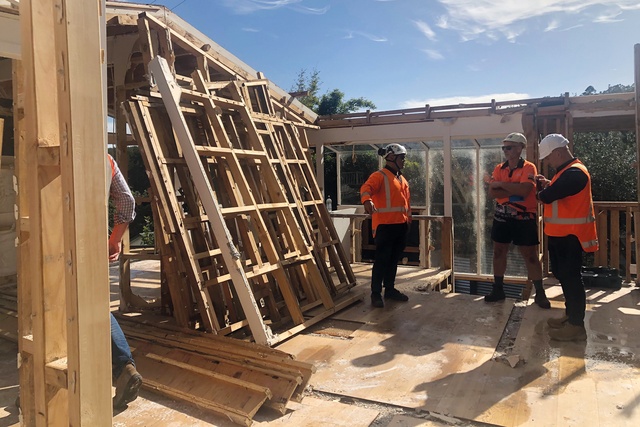
The deconstruction process under way.
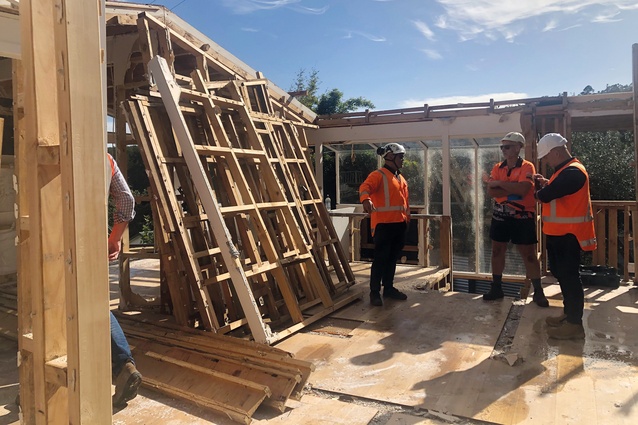
The deconstruction process under way.
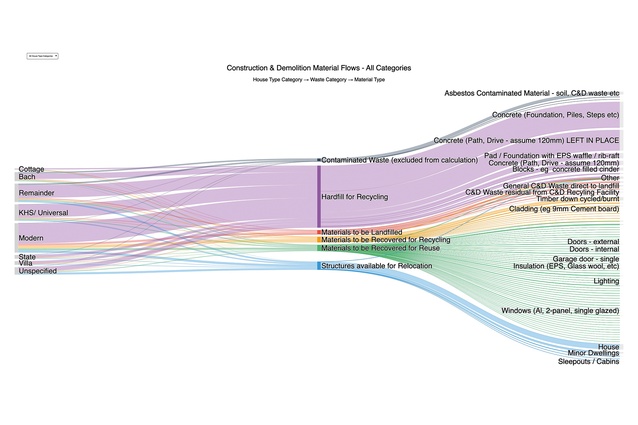
Davis and Turner’s diagram, showing the sources and destinations of materials from house deconstruction.
In part five of this series, observing the disposal of disaster-compromised houses, Andrew Barrie considers moves to overcome impediments to the circular economy.
In 2002, the German government passed a law requiring local car manufacturers, which included some of the world’s major brands, to take back their cars at the end of their useful lives and recycle them free of charge. There was, at the time, much grumbling. Many called into question the industry’s ability to make such a change, as well as the practicability, even the morality, of such an imposition. (Remember the howling here in New Zealand in 2019 when single-use plastic bags were banned?) What transpired, of course, is that the German car industry simply absorbed the constraints. New car designs avoided hybrid materials that were difficult to separate for recycling, manufacturers used clips and standardised fasteners to speed disassembly, and recyclers developed techniques to identify and sort different materials quickly. A good portion of the change involved avoiding practices and materials that had been adopted only relatively recently. Ways of doing things, embraced because they were cost effective, often became less so when end-of-life costs had to be accounted for.
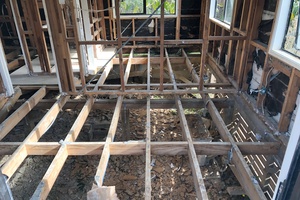
Cars and buildings are, of course, very different things, produced in very different ways. But, when the time comes to disassemble part or all of a building, we might ask: What gets in the way of construction materials flowing out smoothly? This series of articles is following Auckland Council’s project to deal with 1200 compromised houses. Mike LeRoy-Dyson and Claude Dewerse, consultants to the project, emphasise that the most desirable outcome is for each house to be reused as a whole, usually by relocation; a key aspect of their work has been to broaden the industry’s understanding of what has the potential to be relocated. Where deconstruction can’t be avoided, the goal becomes the maximisation of re-use and recycling and the minimisation of waste. A key frustration for LeRoy-Dyson and Dewerse, particularly with more recent buildings, is the presence of materials that are simply not reusable. Previous articles in this series have examined materials that are an active nuisance during deconstruction, such as polystyrene, but LeRoy-Dyson and Dewerse also implore architects to avoid common materials that “from day one do not have second use”. This includes materials that can be neither removed in usable form nor recycled, such as fibre cement sheeting, glass wool insulation and render claddings. They advocate instead for materials that are inherently reusable, such as timber weatherboards that can be removed or sheet flooring that can be unscrewed. “Even carpet can be reused.” They also point to the way relatively trivial design decisions can undo good intentions. For example, the use of common polyurethane coatings makes tongue-and-groove flooring hard to reuse — it glues the relatively delicate interlocking edges of the boards together (better to use an oil finish).
What would good practice look like? In part, it means following ‘Design for Disassembly’ strategies, which understand a building as a repository of resources that should find their way back into a circular economy; a building is not so much an object as a moment in the ongoing flow of materials. This requires, for example, the avoidance of glues and non-reversable fixings that make it hard to separate elements economically. “When recycled framing timber sells for $3 per metre but the de-nailing process requires two guys working at $70 per hour, it doesn’t take much impediment for timber to be directed to landfill.” LeRoy-Dyson and Dewerse also argue that houses should simply be built to last longer. So many decisions, they suggest, are towards the lightest and cheapest thing people can get away with. People go for polystyrene pods over plastic foundation formers because it’s a little bit cheaper. The difficulty, they acknowledge, “is asking people to pay money now for something they are not going to benefit from in the future. … Why do we have a race to the bottom on cost and yet building here is more expensive than it is in comparable economies? Something doesn’t feel right.”
A key part of LeRoy-Dyson and Dewerse’s strategy for improving building deconstruction has been the development of the Resource Recovery Schedule (RRS). Completed for each house before disassembly, it records the volume of each type of material and other special elements, such as kitchen cabinetry or electrical fittings, that the contractors expect to recover. The intentions of the RRS are to: record the estimated material available; have contractors commit to recovering the material they’ve identified as recoverable; and keep contractors focused on those goals during what can be a chaotic process.
Dewerse and LeRoy-Dyson are careful not to overstate the accuracy of the schedules. They are employed prior to deconstruction to make estimates but their accuracy relies on the experience of industry folk. The schedules are revisited at the end of the process to record and verify how well things went. One of the difficulties is that those making the promises recorded on the RRS are not necessarily the people doing the hard labour on site, so part of the RRS’s purpose is to “glue together the different parts of the system so everyone is clear what the goals are”. The focus on results the schedules induce is improving outcomes. “Surprise, surprise: the more we do this stuff, the better we get at it.”
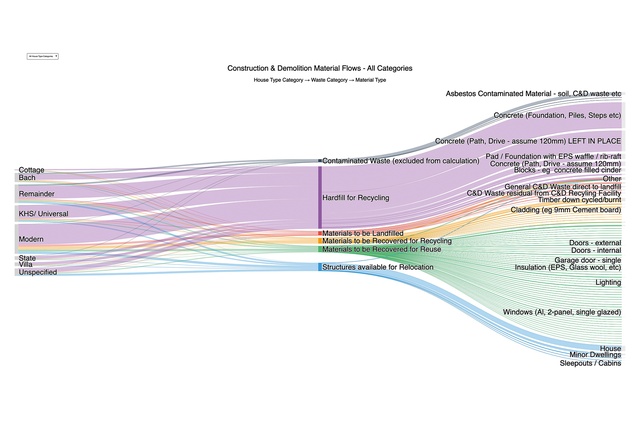
In parallel with LeRoy-Dyson and Dewerse’s work, a team at the University of Auckland has been developing a scan-to-BIM process, which creates digital models of soon-to-be deconstructed houses that can generate estimates of material available that can be compared to the RRS records of materials recovered. The goal is to develop digital tools which might deliver more accurate assessments. In addition, Associate Professor Mike Davis, working with postgraduate student Isla Turner, is tracking the flow of recovered materials. Aggregating data from the RRSs, Davis and Turner are developing a picture of the flow of materials from houses of different types, sizes and ages to their various re-use, recycling and waste destinations. Predictably, Davis’ project has confirmed that the volume of material recovered from a given building closely reflects its time of construction. That is, recyclability is determined by the building practices and materials in use rather than house type. In particular, they note that the ‘glue and screw’ building practices prevalent after the year 2000 are leading to much higher levels of waste.
Davis states, “This is still a high-level tool. More work is needed to show the detail, to be able to zoom in to specific issues.” In the longer term, the hope is that this research may provide tools that can accurately predict how much of a given material a particular house will yield. If expectations can be clarified, demolition might need to be slower and cost more but might allow buildings to function like the repositories of resources imagined by Design for Disassembly advocates. Given the fragmentary nature of the industry, Davis suggests that it will have to be local authorities that administer the tracking tools as part of their wider waste-management strategies. Architects, like those German car designers, will need to reconsider how we build, with recently adopted practices likely coming in for the most scrutiny.