A tribute to Pip Cheshire: Andrew Barrie
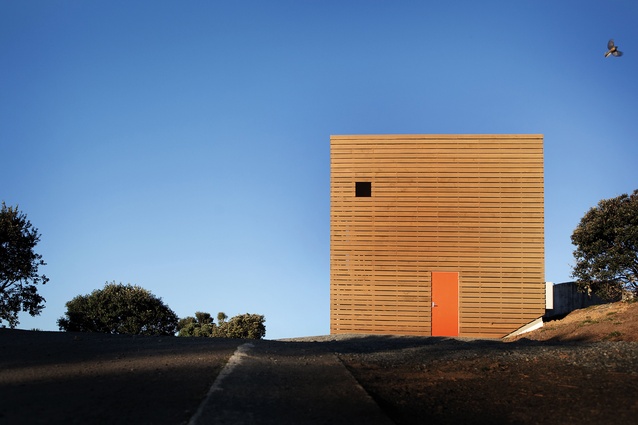
Leigh Marine Laboratory at Goat Island.
Andrew Barrie, Professor of Design at the University of Auckland’s School of Architecture and Planning, pays tribute to his friend and colleague.
To be in Pip’s orbit was to enter a world of stories. Arriving in Pip’s office after my years in Japan, I had left a world where ideas and explanations, even when they were metaphorical or poetic, were liked best when they were instantly understandable and had a sense of inevitability. With Pip, every idea he presented, whether making a design decision or arguing a point of view, was explained through or supported by a story — of a previous project, of an encounter with a client or a contractor, of an experience while travelling.
He was a natural-born raconteur and stories flowed out of him. He took as much pleasure in the stories of others as in his own, and a long design discussion or Friday night drinks played out as a ping-pong ofstories around whatever events or ideas were in the air. He once called me into a meeting to tell one of his favourite stories from my Japan days — about dealing, after a 72-hour work bender, with a rat trapped in my bathtub. It was not clear why that peculiar story was needed in that moment, but it presumably illustrated some point he was trying to convey to the meeting.
Pip’s prolific writing was an extension of his storytelling or, perhaps more correctly, the fullest expression of it. His writing career began at the University of Canterbury student mag, Canta, and extended through editing (with Pete Bossley) the NZIA newsletter Big Issues, contributions to Metro and Architecture NZ, establishing (with Cheshire Architects staffers) the long-running iteration of the NZIA Auckland Branch newsletter entitled Block and, most recently, his regular columns for this journal. He seemed, instinctively, to pick up on any opportunity to make things better, and most of his writing was directed at the profession. While his stories tended to be personal, they had at their core an effort to convince or cajole, to enlighten or encourage. They were charmingly conveyed messages about how we, as architects and as a profession, could do better.
I often recall a discussion with Pip where the subject of ambition came up. His comment, typically understated, was that a successful professional life was simply “to do good work, and to do it with people whose company you enjoyed”. In person, good stories were part of being good company, and his writing was central to his being a good companion to the profession. Others will have written here about Pip’s remarkable body of design work and his impact at the Institute. Alongside this, whether it was around the office lunch table, in the corporate boardroom, in the teaching studios at the University of Auckland, or through the pages of the profession’s various journals, his erudite and articulate storytelling will endure in the way we understand and talk about architecture here in Aotearoa.