What’s the plan?
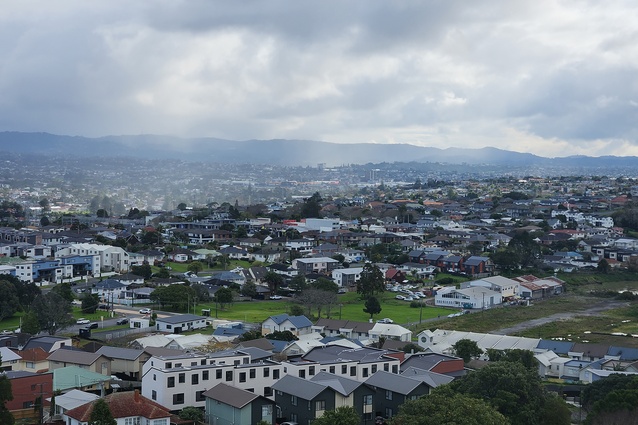
Auckland intensifies: view from Puketāpa (Mount Roskill) looking west.
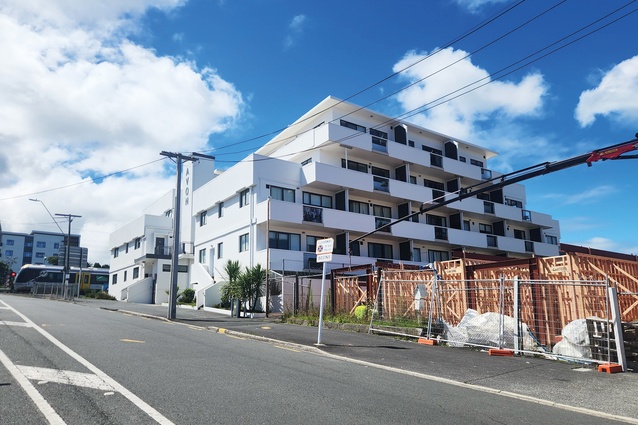
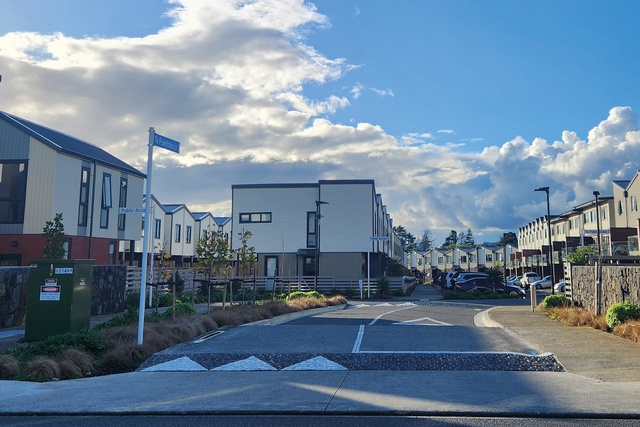
Development adjacent to the rail line, Avondale, Auckland.
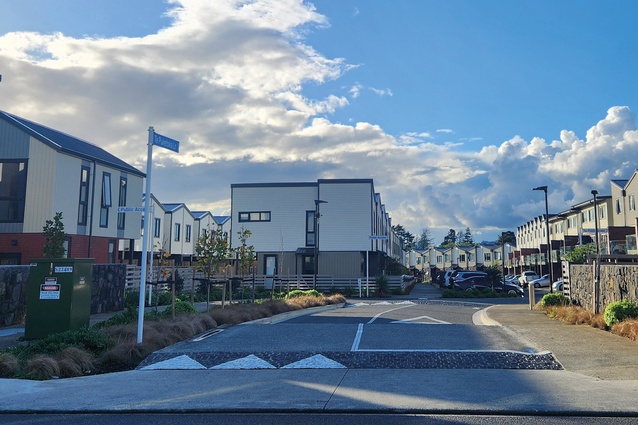
Medium density _ The Unitary plan in action, Auckland 2026.
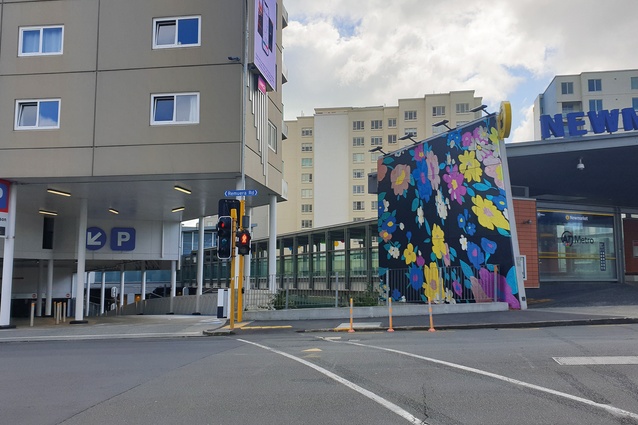
Newmarket, Auckland
Ant Vile considers ongoing changes to the Resource Management Act and asks how we can provide both quality and certainty beyond election cycles.
It has been said, with some certainty, that the only certainty is uncertainty. Within the current raft of legislative change at both central and local government levels, this much feels clear; 2026 remains a year punctuated with question marks.
RMA reform. Auckland’s Plan Change 120. Interest rates. An election. Global geopolitics and the distractions of the Trumpian circus. The price of milk and gold. And so it goes.
I am no planning expert nor economist. What follows are reflections on proposed policy reform and its effects on the built environment and development ecosystem — effects that are anything but minor. Consider it a prompt for the water cooler; what policy direction remains relevant amid so much change? How do we get on with building the cities we endlessly talk about?
The sun will rise and set until it does not. For now, make hay while it shines. Pack an umbrella, a T-shirt and a polo neck. The forecast is unclear.
Wherever you sit politically, uncertainty is bad for business. It undermines investment, delays development and weakens confidence in cities where bricks and mortar outlive electoral cycles.
Our cities – and, by extension, our infrastructure and buildings — are outcomes of politics. Architecture is a political act, as is planning. It always has been. It carries within it the potential for transformation or stasis.
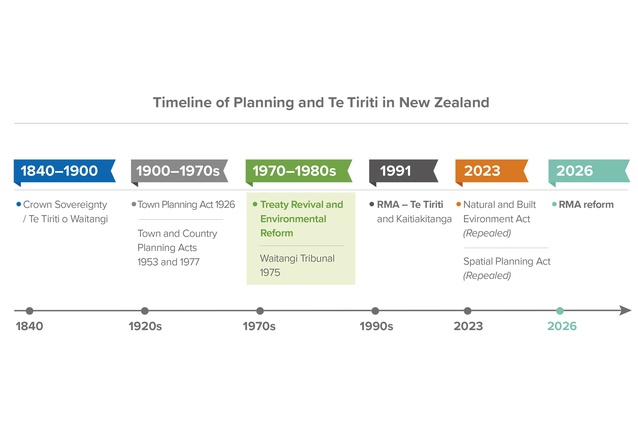
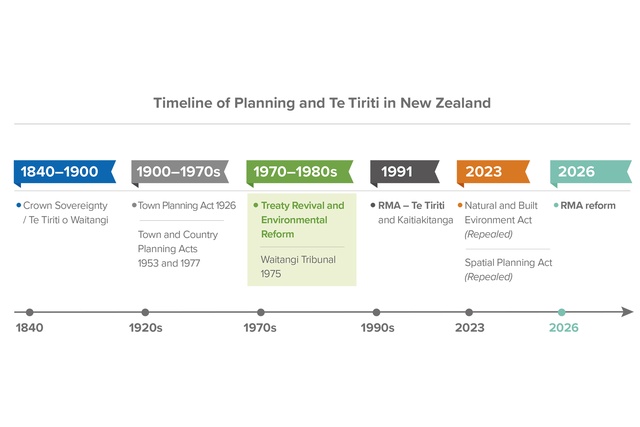
From 1840 onwards, planning in Aotearoa evolved alongside colonisation, largely sidelining Te Tiriti in practice and supporting extractive industry. Twentieth-century legislation — the Town Planning Act 1926, and the Town and Country Planning Acts of 1953 and 1977 — formalised zoning and council control. Treaty obligations were peripheral.
The 1970s shifted the tone. Environmental awareness grew. The Waitangi Tribunal was established. By 1991, the Resource Management Act reframed planning around effects management and required decision-makers to take Treaty principles into account and have particular regard to kaitiakitanga.
Fast-forward to 2023: replacement legislation intended to overhaul the RMA was passed, then repealed before bedding in. Now we face another reform cycle — reform layered upon politics layered upon policy du jour.
Under the RMA, territorial authorities must maintain district plans, reviewed every 10 years and aligned with national direction. These plans are the primary statutory mechanism regulating land use and enabling community input.
Auckland has long been the laboratory. The early 2000s brought the Regional Growth Strategy and its Growth Concept: quality, compact urban environments; intensification within existing limits; and expansion only where environmental and infrastructure principles could be met. The Urban Design Protocol followed. In 2009, the supercity was created. In 2016, the Auckland Unitary Plan became operative — a single document governing a vast metropolitan region.
The conversation around compact urbanism has been circling for decades. My experience of Auckland in the 1980s suggests the trajectory was set long before flat whites animated our streets. The 1980s were a wrecking ball. Heritage was shown the exit door; the glitz of new development welcomed to the dance floor.
Forty years on, most built environment professionals agree; intensification within brownfield areas, with mixed-use neighbourhoods near rapid transit, is the logical way forward. Globally, the evidence supports it.
So, what is the obstruction?
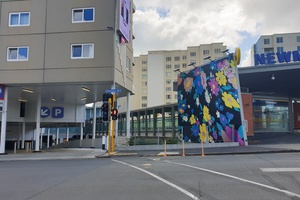
The data is clear. Over the past two decades, Auckland has shifted from predominantly stand-alone dwellings towards greater density. The numbers are not ambiguous.
But numbers are not quality. Intensification does not a city make.
Thousands of additional housing units represent significant investment, yet they do not automatically produce walkable, high-amenity, compact urban environments. The critical question is not whether or not we intensify – not even where or how tall. It is how we define and incentivise quality, aligned with infrastruture, and how we provide certainty for developers and the public beyond election cycles.
The plan must remain focused and coordinated. Continual reform is economically damaging and culturally stagnating. Where does talent want to live? Where there is certainty, jobs and opportunity for innovation.
Recent reforms signal a push towards greater centralisation – templated district plans and reduced local discretion. Will this deliver fundamentally different outcomes or simply repackage what we already have? Will a future government repeal the changes yet again? It is an exhausting merry-go-round.
As design professionals, how do we move the studio conversation into the public realm? How do we maintain community-led spatial planning within increasingly generic frameworks? How do we unlock sustainable urbanisation in the face of climate reality and affordability pressure, while maintaining Te Tiriti as foundational to nation-building over the next 20, 50 or 100 years?
Why can we not be global leaders in this space — drawing on our geography, culture and number-eight-wire ingenuity?
The constant backwards and forwards between competing agendas is a recipe for stagnation: political signalling that produces more greenfield suburbs and compromised quality where density is required most, and market-led outcomes in places that require civic ambition.
Legislation will shift. Frameworks will be renamed. Acronyms will evolve. The city, however, will live with the consequences — as will those who inhabit it. The year of 2026 remains a year of question marks. The weather will reveal itself in due course. Pack accordingly.