The architect as repairer: The retrofit imperative
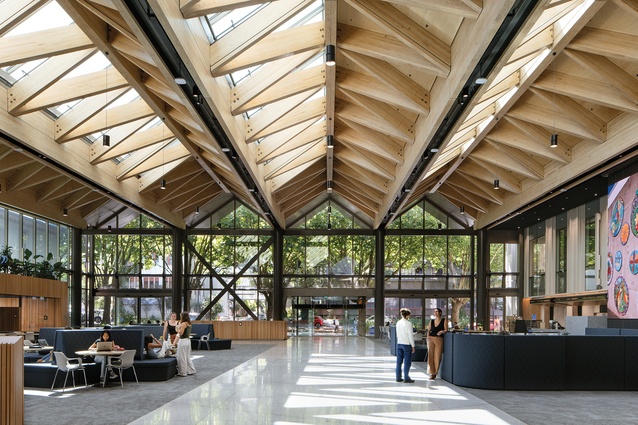
Jasmax’s award-winning B201 Building for the University of Auckland.
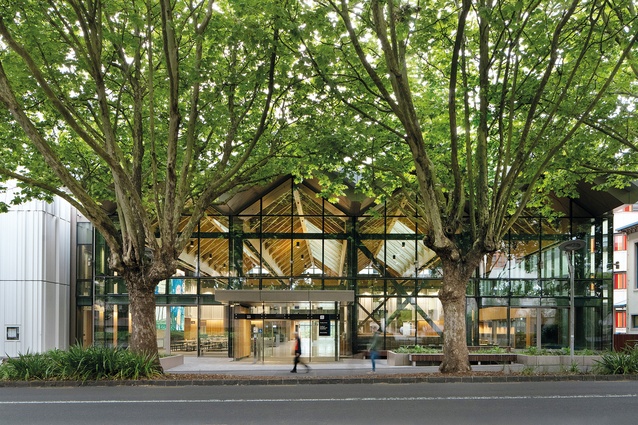
Jasmax’s award-winning B201 Building for the University of Auckland.

Strategic Sustainability Advisor Rachel MacIntyre.
In this, the first in a series of sustainability thought pieces from Te Kāhui Whaihanga New Zealand Institute of Architects, Rachel MacIntyre looks at why retrofit and adaptive re-use are the most impactful low-carbon design strategies architects can adopt.
Buildings can change — architects have been reinventing villas for decades — so why does demolition remain the default solution over retrofitting?
We demolish an estimated 2000–4000 homes in Aotearoa annually, though data is incomplete. Construction and demolition waste accounts for at least 50% of landfill — rising to 70% when soil and hazardous materials are included. Demolition throws away energy, materials and cultural memory.
Better tracking and policy intervention are urgently needed. Demolition should be the last resort. Retrofit and adaptive re-use, by contrast, strengthen communities, cut emissions and create healthier, high-performing homes.
The opportunity is in front of us and, with the right policies and cultural shifts, we can achieve climate goals, strengthen resilience, improve public health and generate broad public and political support. This shift requires architects to embrace a new identity — not just as designers, but as repairers, who see architecture as an act of care. Retrofit expands our design tool kit and brings the skills needed to repair and re-use well.

Globally, the construction sector is producing carbon emissions so quickly that it’s likely to overshoot the limits needed to keep global warming to 1.5°C or even 2°C. If current trends continue, building activity alone could use up the entire carbon budget for a 1.5°C world by 2050. In New Zealand, the BRANZ carbon budget allows approximately 17 tCO2e for a stand-alone home, yet, typical builds overshoot this by five to eight times. Because most emissions come from carbon-intensive materials and construction methods — retrofit and re-use offer the most effective path to cutting emissions.
The health benefits are also significant and are often overlooked in the discussion around retrofitting; every dollar spent on housing improvements, such as insulation and heating, delivers roughly five dollars in health savings.1 Around half a million New Zealand homes need retrofitting to meet modern thermal comfort and energy efficiency benchmarks.
Education is a key barrier. Architecture programmes still largely follow 19th-century models focused on new construction. As Jorge Otero-Pailos2 argues, schools must reorient towards caring for the existing built environment. There are flickers of change with design briefs such as the ‘Spirit of Repair’ at the University of Auckland, tasking students to imagine retrofitting the Upper Greys Avenue Flats rather than demolishing them and other architecture schools are leading the charge.
Becoming repair-focused requires a cultural shift among architects: embracing imperfection, revealing the junctions between old and new, and prioritising reused or low-impact materials.
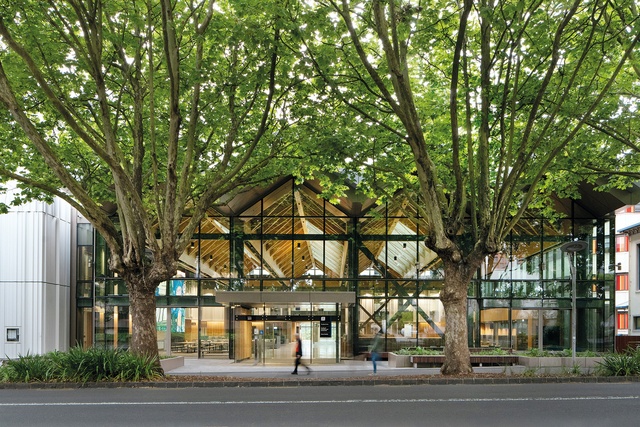
Cost and viability are central drivers. For the University of Auckland’s award-winning B201 Building by Jasmax, adaptive re-use combined with low-carbon design cut embodied carbon in half and reduced energy use by two-thirds, compared to an equivalent new build. The project achieved a 25% cost saving and shortened construction time by a year. The 50-year-old building is now a state-of-the-art academic environment, ready for another 50 years of use.
Communities also value buildings for the memories they hold, yet planning systems rarely reflect this. The Gordon Wilson Flats show the cost of that gap. Preservation for its own sake isn’t enough — buildings must evolve to serve people and place but current policies often block adaptation. Heritage matters but so does cutting carbon; retrofitting the Gordon Wilson Flats instead of knocking them down and rebuilding would have avoided 3247 tonnes of carbon being released. That means preventing almost all the emissions that normally come from constructing a new building, showing the impact of re-use over demolition, with avoidance of 87% in upfront emissions and 82% of whole-of-life emissions.
Robust policy and financial incentives are essential and there are now many examples of the ways in which other cities and countries are tackling these issues. In the United Kingdom, Westminster’s Retrofit First policy requires developers to justify demolition, based on thorough audits. Circularity is becoming a legal obligation in Brussels, and the EU is moving in the same direction, with proposals for a similar framework that prioritises conservation over demolition. Cities such as Copenhagen and Vienna offer significant financial support for residential retrofits, while Adelaide’s Bluefield policy encourages ‘missing middle’ density without eroding neighbourhood character.
In Aotearoa, the New Zealand Green Building Council’s ‘The Homes We Deserve’ campaign calls for deep retrofit programmes, expanded subsidies, national financing for improvements and mandatory energy performance standards.
The housing crisis and climate emergency demand action. Retrofit and adaptive re-use must move from the margins to the mainstream if we are to achieve our carbon goals. As Anne Lacaton3 states, demolition is a waste of energy, materials and history — and an act of violence. Retrofitting half a million homes would deliver healthier communities, lower emissions, potentially more affordable living and new exciting opportunities for architects. Our decisions now shape whether a building lives another 50 years or ends up in landfill and how we will live for generations to come.
References
1. Healthy Homes Initiative: Five-year outcomes evaluation, published in November 2024 and commissioned by University of Otago for Health New Zealand (Te Whatu Ora), Kāinga Ora and ACC.
2. Jorge Otero-Pailos is Professor and Director of Historic Preservation at Columbia University’s Graduate School of Architecture in New York.
3. Anne Lacaton is the principal of the Paris-based architectural practice Lacaton & Vassal and winner of the 2021 Pritzker Prize. She is also a renowned educator.