Reset wins international award for Waitematā Harbour Crossings designs
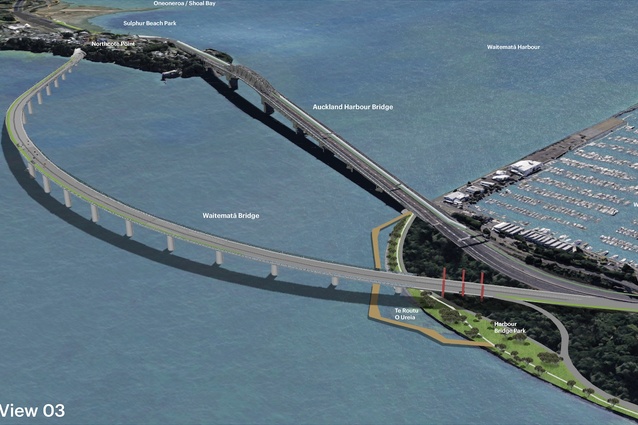
Northbound traffic would use the new six-lane bridge, while the existing eight-lane Harbour Bridge would carry southbound vehicles.
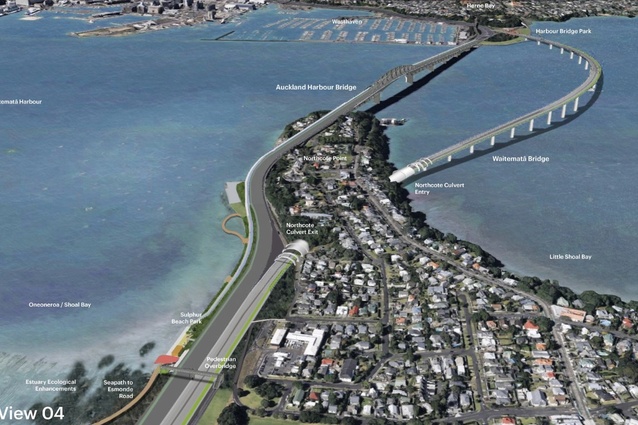
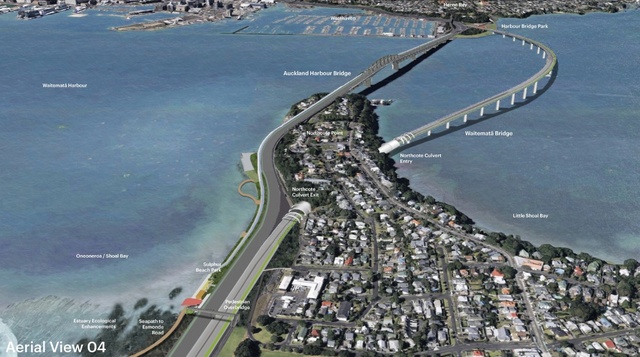
The proposed new Auckland Harbour Bridge would pass through a short culvert at the base of the Northcote peninsula to merge with the existing motorway.

Approximately 10 kilometres long and 30 metres wide, the new causeway would connect Waterview to Greenhithe and the northern motorway.

Reset bridge, causeway and tunnel options and potential relative costings.
Auckland-based landscape architecture and urban design studio Reset has received the International Federation of Landscape Architects – Asia Pacific Region (IFLA-APR) Award of Excellence for its Waitematā Harbour Crossings proposal. The project took the top award in the Unbuilt Projects: Commercial and Institutions category.
In their citation, the IFLA-APR jury described the proposal as demonstrating “ambitious thinking and design integrity,” adding that it showed “outstanding design innovation, strong environmental stewardship, and positive community impact.”
Reset director Garth Falconer says the recognition is significant for both the practice and ongoing national discussions around future infrastructure. “We are grateful to have international recognition for our Waitematā Harbour Crossings design, plans for what we understand would be the largest infrastructure project in the nation’s history,” he says.
Under Reset’s concept, a new six-lane Waitematā Bridge would arc approximately 500 metres from the existing Auckland Harbour Bridge before passing through a short culvert at the base of the Northcote peninsula and rejoining the motorway network. Falconer says the arrangement would “solve the traffic issues to the north of the city,” with northbound traffic using the new bridge and the existing bridge dedicated to southbound movement.
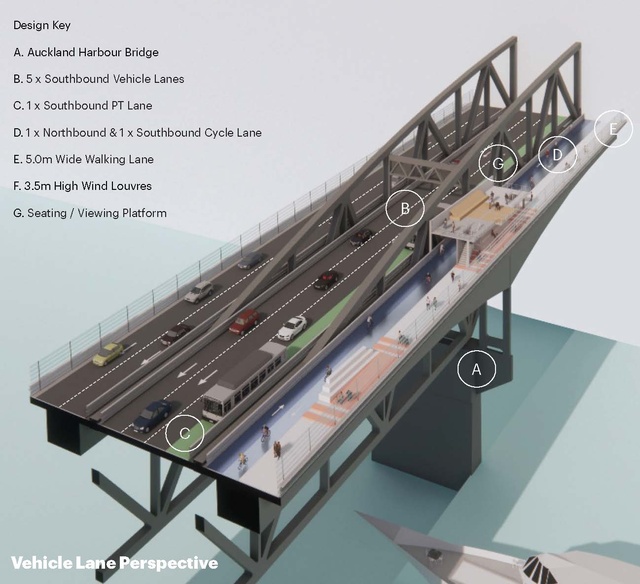
The practice says its design would provide dedicated public transport lanes in both directions and reallocate two eastern lanes on the existing Harbour Bridge for walking and cycling. According to Reset, the approach would reduce structural loading on the existing bridge and enable long-awaited active-transport connections. The studio also states that the concept could be delivered “within five years,” though no independent assessment has been publicly released.
Falconer estimates the proposed bridge could be delivered for “under $2.5 billion” and characterises this as “a fraction of the $40 billion price of a cross-harbour tunnel favoured by the New Zealand Transport Agency at the time of the last election.” He adds that the scheme “would cause minimal disruption to adjacent communities” and could be anchored by new parks at each end, including a walking and cycling link along Shoal Bay to Takapuna.
The IFLA-APR award announcement, made at the federation’s conference in Mumbai, also acknowledged Reset’s concept for a third harbour crossing: the Causeway Bridge. According to Reset, the idea is intended to futureproof the region by providing a western bypass linking State Highway 20 at Waterview to Greenhithe and the northern motorway.
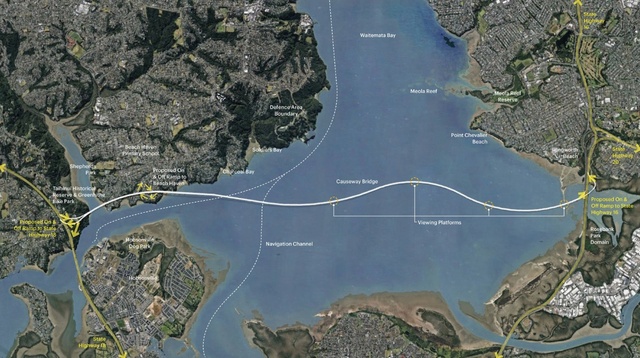
The practice estimates the route could reduce some trips by up to five kilometres. Falconer describes the proposed structure, approximately 10 kilometres long and 30 metres wide, as a “low-pitched, thin-line bridge” that would sit on piers reaching about eight metres above the water. Reset says the design includes six lanes for vehicles and public transport, five-metre-wide walking and cycling paths, and rest points for views and fishing.
The studio proposes that the bridge be constructed from low-carbon concrete to reduce embodied emissions and ongoing maintenance. Reset cites modelling suggesting that if 20 per cent of current harbour bridge users diverted to the bypass, Auckland could reduce annual travel by 62 million kilometres and lower emissions by 11,212 tonnes of CO₂. These figures have not been independently verified.
Reset estimates the Causeway Bridge at around $3 billion and says the connection could support regeneration in Beach Haven and Birkdale. Falconer suggests the development could “enable around 3,000 new homes” and bring new employment opportunities.
“Getting Auckland moving is more than just a transportation issue; it is about how infrastructure fits into the fabric of the city and the harbour landscape,” Falconer says. He adds that the practice has received “strong public support” and hopes central government “is listening.”
Reset note:
- In 2025, NZTA focused testing on a small substratum area east of the current Harbour Bridge for a potential tunnel or bridge.
- In contrast to Reset’s winning plan, NZTA’s preferred bridge option sits hard against the existing structure on the eastern side - a design that would remove part of Westhaven Marina from public use and obscure Northcote Point as well as the iconic Auckland Harbour bridge.
- The cost of a harbour crossing tunnel is estimated at $20 to $40 billion. It would take an estimated 15 years to construct and generations to pay off.
Reset website here.
NZTA requested that we add the following comment to this article:
NZ Transport Agency Waka Kotahi (NZTA) is currently completing a Detailed Options Assessment, refining the scope of the additional Waitematā harbour crossing components and developing a deeper understanding of the costs, risks and trade-offs, for both the bridge and tunnel option, prior to seeking a decision on which option to progress to delivery.
The bridge option and tunnel option that NZTA are progressing further are located to the east of the existing Auckland Harbour Bridge. These are the only two options that are being considered. The Waitematā Harbour Connections project is also progressing a robust level of design to understand the engineering requirements and reduce the risk profile in cost estimates.
The project will provide for a well-connected and efficient transport system, providing greater long-term resilience for the wider transport network, while reducing the current pressures on the aging Auckland Harbour Bridge.