Reflections from COP30
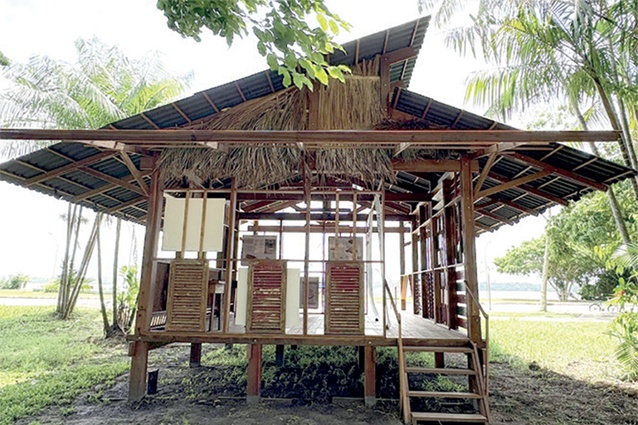
Casa Palafita, built as a collaboration between Belém’s UFPA University and the Order of Architects of France.
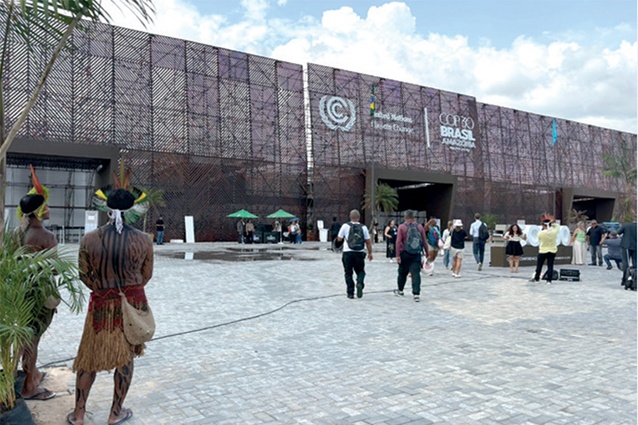
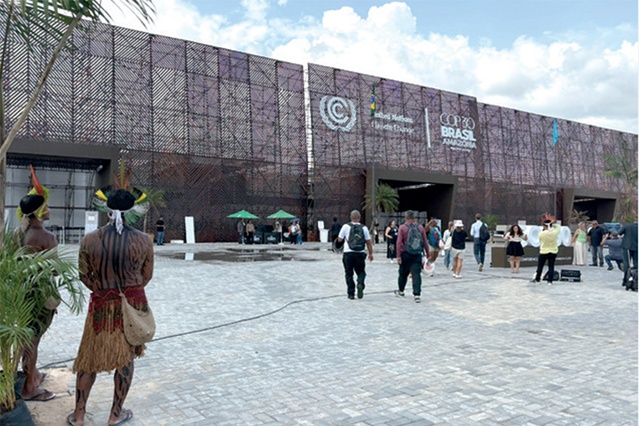
The main entrance and front façade to this year’s COP30.
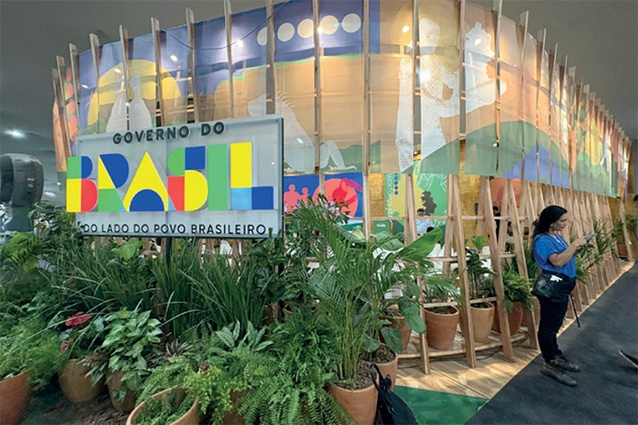
The Brazilian Pavilion at COP30, built with natural materials.
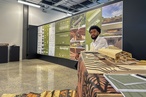
In November 2025, AUT’s Priscila Besen attended COP30, the annual United Nations climate summit, in the Amazonian city of Belém, Brazil. She witnessed how critical cross-disciplinary solutions are to addressing our climate crisis.
As a Brazilian-born senior lecturer in regenerative architecture at Auckland University of Technology, I saw COP30 as an opportunity to connect sustainable solutions between the two countries I call home. COP (Conference of the Parties) gathers global leaders to assess climate progress and negotiate future commitments, and this year marked the 10th anniversary of the Paris Agreement, adopted at COP21.
For architects, COP summits matter in two key ways. First, the high-level agreements from COP can shape national policies, including building standards and carbon accounting regulations directly impacting our profession. Second, the conferences highlight local actions and practical solutions – spotlighting innovative architectural and urban design projects advancing climate mitigation and adaptation. The architecture profession was well represented, with organisations such as UIA (International Union of Architects), CAU-BR (Council of Architecture and Urbanism of Brazil), AIA (American Institute of Architects) and ICOMOS (International Council on Monuments and Sites) actively participating in sessions. I was honoured to contribute to two panel discussions as part of the Action Agenda: one on coastal adaptation to climate change and another exploring the intersection of cities and water.
This year’s COP held heightened expectations thanks to its Amazonian setting and promises to amplify Indigenous voices. Indigenous leaders were present and contributed meaningfully but their influence on high-level decisions was still limited — an area for future improvement. It was inspiring to see nine rangatahi Māori, who led many events discussing climate adaptation and mitigation. Their group, Te Kāhu Pōkere, was established under Pou Take Āhuarangi, the climate change arm of the National Iwi Chairs Forum, and was the first iwi-mandated Māori youth delegation to attend a global COP.
The scale of COP30 was overwhelming, with 50,000 delegates and countless daily events. Each day was intense, with protests inside and outside the venue, highlighting urgent calls for inclusion and action. In a dramatic incident, a fire forced the evacuation of attendees on the second-to-last day.
The first days were especially relevant for architects, with sessions on Adaptation, Cities, Infrastructure, Water, Waste, Local Governments, Bioeconomy and Circular Economy. A Ministerial Meeting on Urbanization and Climate Change was historic, bringing together ministers, mayors and community leaders to reaffirm urbanisation’s central role in accelerating climate action. Cities produce over 70 per cent of global emissions and face growing climate impacts. UN-Habitat emphasised that climate action will be won or lost in cities, citing the triple housing challenge: addressing inadequate housing, meeting future demand and adapting homes for a changing climate. New analysis showed cities are now central to national climate plans (NDCs 3.0), with plans featuring strong urban content nearly doubling. Cities and regions were reaffirmed as indispensable to achieving NDCs 3.0 and bridging the gap between global ambition and local action.
The architecture of COP30 itself was bland. The main venue was a windowless temporary tent with noisy air conditioning: not particularly inspiring except for its front façade. Some pavilions and external spaces offered more design inspiration. The Brazilian pavilion had an interesting timber structure with fabric creating a permeable edge. AquaPraça, a floating pavilion gifted by Italy, provided a powerful, immersive experience of meeting rising water at eye level — also, we were immersed in rain in this pavilion with its semi-open roof. ALDEIA COP was a gathering for Indigenous communities, and included traditional architecture well suited to the Amazon’s climate. At the local school of architecture at UFPA University, Casa Palafita — a collaborative initiative with the French Institute of Architects — demonstrated a house inspired by wooden stilt buildings commonly found along Amazonian rivers.
While high-level talks often seemed abstract and disconnected from daily life, the presentations by architects and local leaders demonstrated practical solutions and ways in which to translate theory into reality. The Resilient Cities, Cities & Regions, and Buildings & Cooling pavilions featured sessions on architecture and urbanism. It was inspiring to see mayors of small Brazilian towns share the ways they implemented nature-based solutions for urban cooling and flood prevention. Patrícia Sarquis Herden, president of the CAU-BR, emphasised architects’ critical role in the climate agenda, working from housing to city scale. Amid professional uncertainty driven by AI and other changes, AIA President Illya Azaroff reminded attendees that architects are uniquely equipped to lead climate adaptation projects and connect communities with funding and implementation partners. “There are not enough of us to do the job,” he said. Observing the many discipline-focused pavilions, I reflected on how architecture’s systems-thinking and cross-disciplinary nature can connect diverse sustainability-related fields. Increasingly, our work may extend beyond buildings to broader integrated solutions to improve quality of life and community resilience.
The location for COP31 generated significant interest, with Australia and Türkiye actively campaigning to host. Their pavilions were lively, serving free coffee and distributing local products as part of their campaigns. Many hoped Australia would host COP31 in collaboration with Pacific Island nations to highlight rising sea levels. Ultimately, Türkiye was selected to host COP31, Australia will lead negotiations and the Pacific region will host a special pre-COP meeting.
COP30’s final decisions left many disappointed, especially given the ambitious opening speeches and the Amazonian setting. The summit’s final document fell short of directly confronting the main causes of the climate crisis. A clear pathway to phasing out fossil fuels and ending deforestation was discussed but was missing from the final document as a result of ongoing international disagreements. Encouragingly, approximately 90 countries voiced support for these critical road maps, and the presidency has pledged to continue developing them post-COP — so there is hope for further progress. Disappointingly, Aotearoa New Zealand was on the fence on the fossil fuels road map — the country was neither in the group asking for it, nor in the group opposing it. Unfortunately, the predictions for the future are worrying, and the world is not on track to limit warming below 1.5°C. Adaptation received unprecedented attention, with a commitment to triple adaptation finance by 2035. The conference also advanced a comprehensive set of 59 voluntary, non-prescriptive indicators to track progress under the Global Goal on Adaptation. It remains to be seen how the balance between mitigation and adaptation priorities will play out in future years, as the urgency of adaptation can lead to more local actions and less global collaboration.
Despite its limitations, COP30 made progress in broadening participation. Inclusion of diverse groups and enhanced civil society engagement exceeded those of previous years, reflecting a growing recognition that climate action must be collaborative and that there must be just transitions. Delegates also experienced firsthand the challenges of extreme weather in the Global South — Belém’s hot, humid conditions and daily extreme rainfall in a city with precarious infrastructure underscored the urgency of climate adaptation. I came back with more appreciation for Tāmaki Makaurau’s green infrastructures, which can keep us cool and safe from flooding in future warmer years.
I left Belém with a renewed understanding of the importance of the architecture of the spaces where climate discussions take place, and the role that architects can have in implementing their goals. It was shocking to see that decisions about the planet’s future were made in venues that lack basic acoustic, thermal and visual comfort, and are completely disconnected from nature. Experienced attendees told me that such precarious spaces are common at COPs because of the temporary nature of these structures. I wondered whether or not better-designed environments, rather than these stressful spaces where it is difficult even to listen to one another, might allow more positive discussions. And good architecture and urban design are fundamental to implementing high-level decisions at the local scale. Although buildings are major contributors to the climate crisis and each one has an environmental impact, architects have the potential to take leading roles in developing innovative, cross-disciplinary solutions for the future. By connecting different fields, we can contribute to re-imagining the way we live and broaden our professional activities to help address the urgent challenges that threaten human survival. Well-designed buildings and neighbourhoods can be life-saving in a changing climate, and, despite the lack of effective global plans, each small project can help enact local solutions now.