On the Rise: Tamzyn Bremer
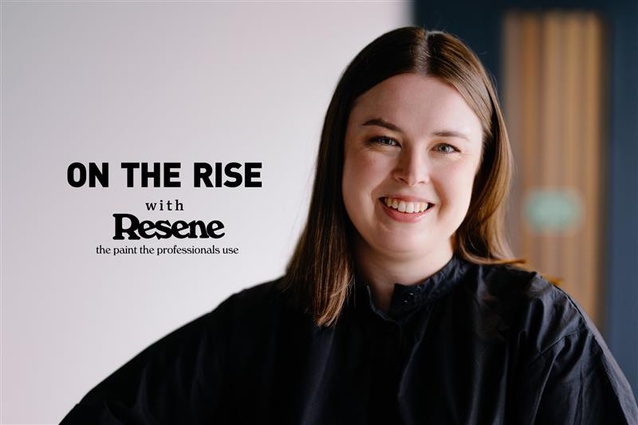
Tamzyn Bremer is an architectural graduate at RTA Studio.
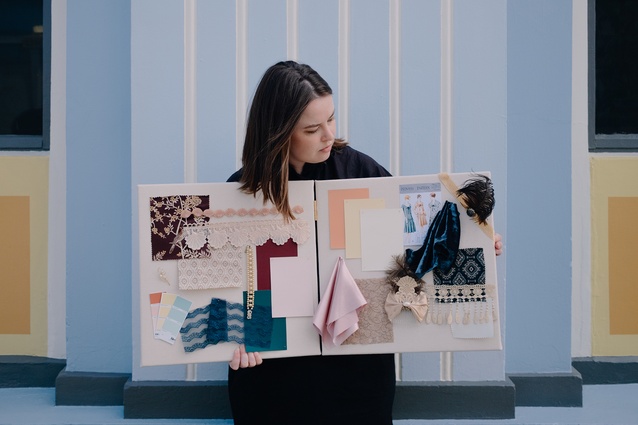
Tamzyn’s art reflects her connection to dance and performance.
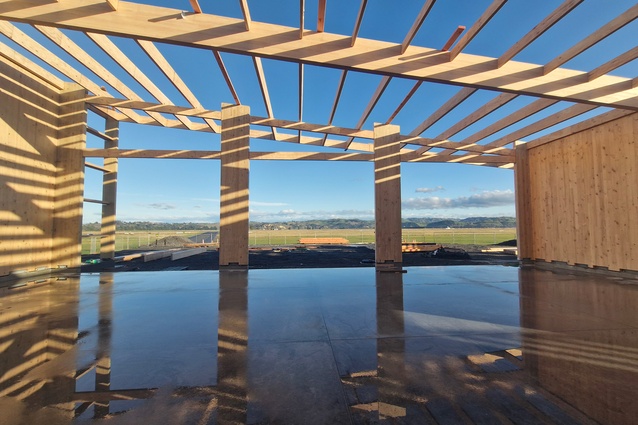
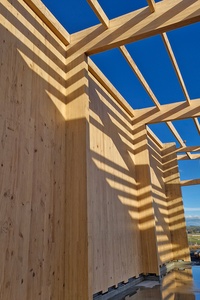
RTA Studio’s Hawkes Bay Airport Fire Station under construction — showing off the mass timber structure.
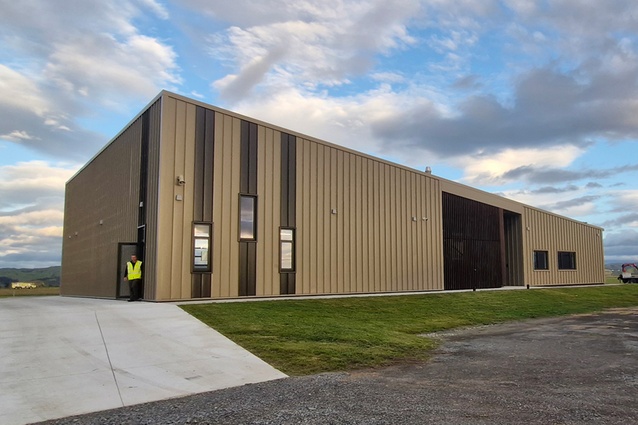
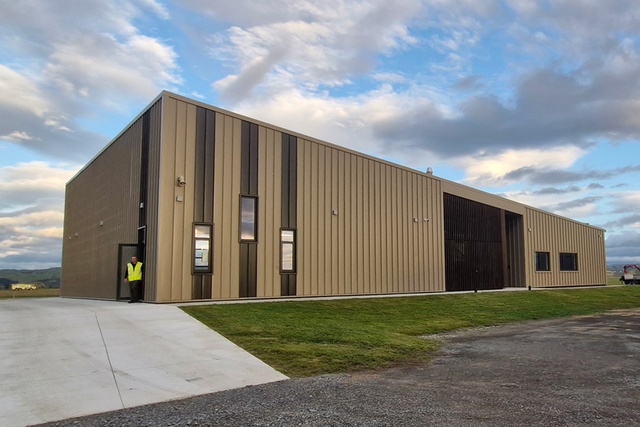
The completed Fire Station was opened in early February this year with a karakia.
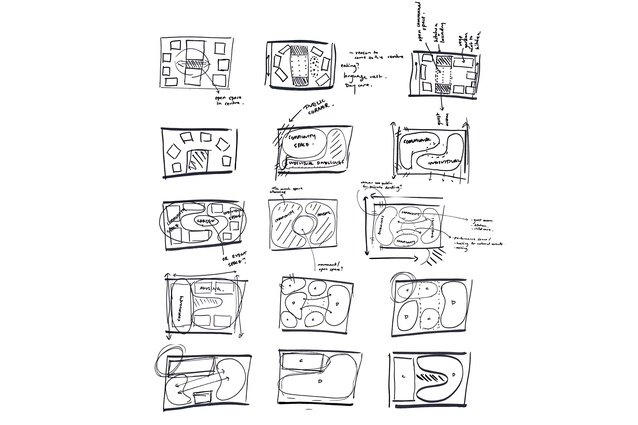
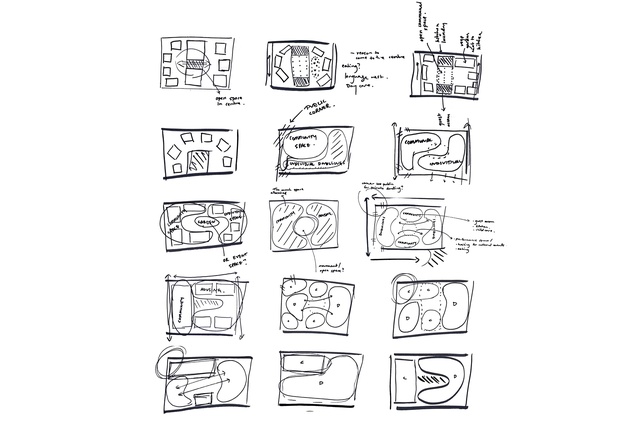
Concept planning sketches in Tamzyn’s Masters’ thesis, ‘Applying Cook Island Concepts of Family Living to a Contemporary Auckland Context’.
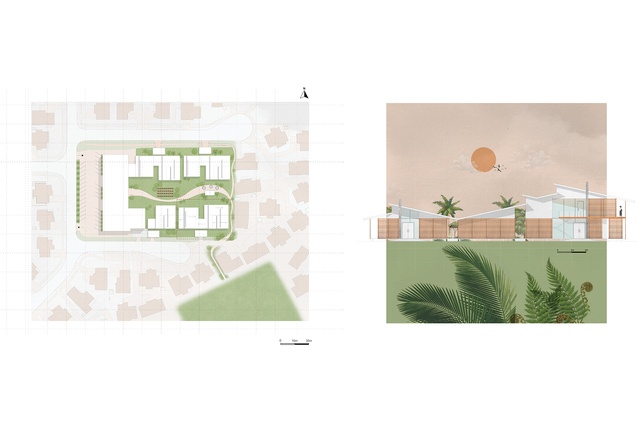
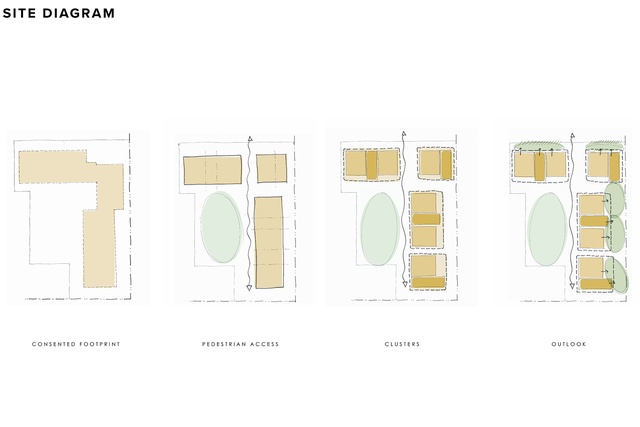
The master plan and key elevation in Tamzyn’s Masters’ thesis, ‘Applying Cook Island Concepts of Family Living to a Contemporary Auckland Context’.
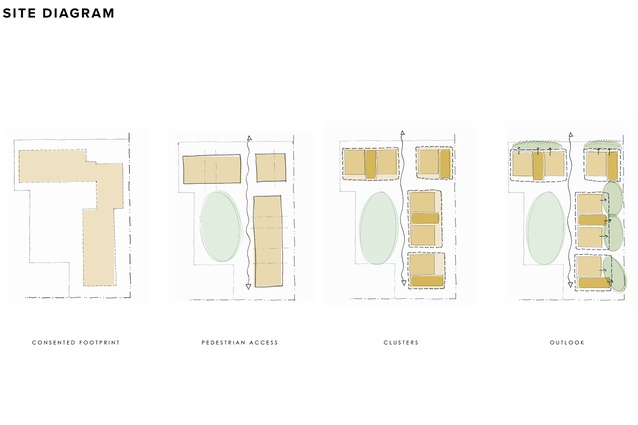
Concept images for a Kaumatua housing development currently under construction in Wairoa. Tamzyn used a similar diagrammatic sketch method during her thesis to work out spatial arrangements.
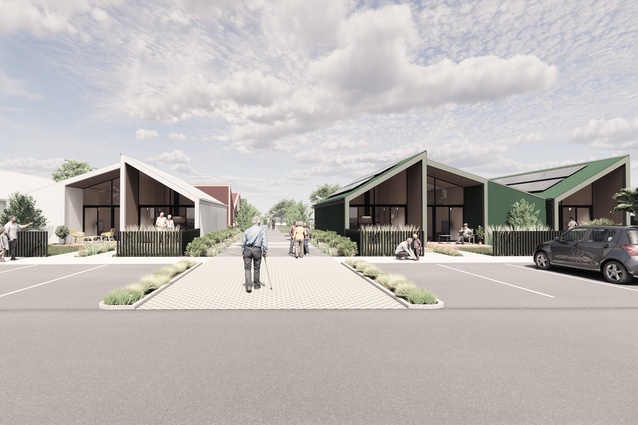
Concept render for a Kaumatua housing development currently under construction in Wairoa. Tamzyn used a similar diagrammatic sketch method during her thesis to work out spatial arrangements.
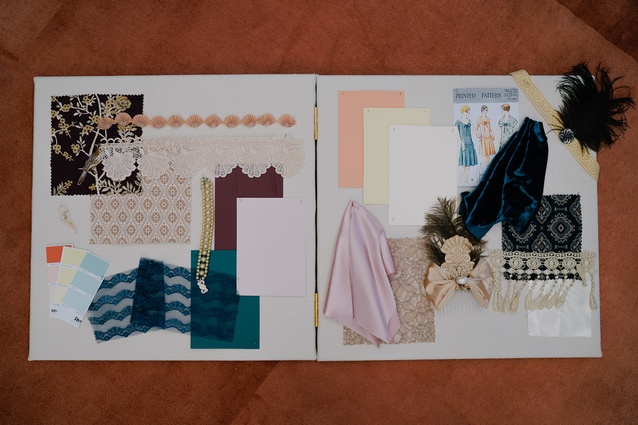
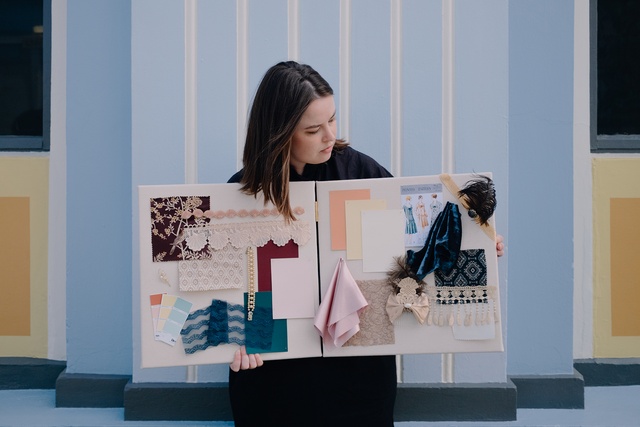
Tamzyn’s art focuses on complimentary textures and patterns, inspired by the 1920s and 30s.
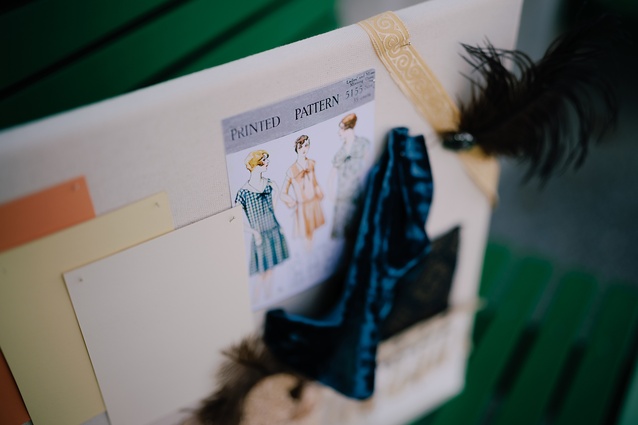
Fabric textures and Resene colour selection in Tamzyn’s artwork.
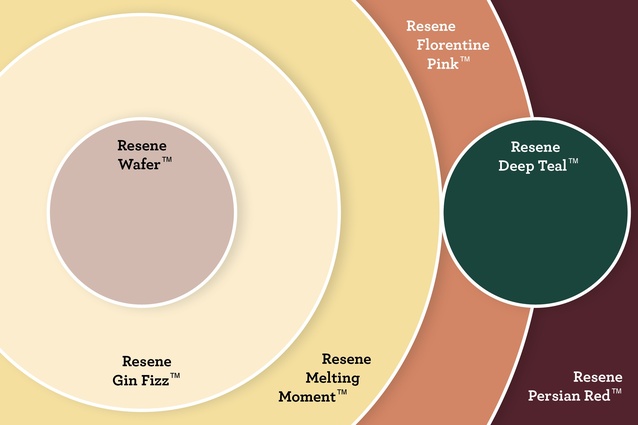
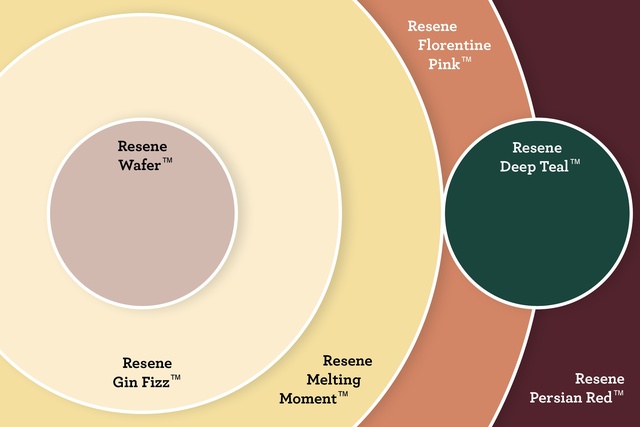
Tamzyn’s Resene colour selection features Resene Wafer, Resene Gin Fizz, Resene Melting Moment, Resene Florentine Pink, Resene Deep Teal and Resene Deep Teal.
ArchitectureNow’s On the Rise series, supported by Resene, profiles young designers from across the country who are shaping the future of the industry. In this instalment, we talk to Tamzyn Bremer, an architectural graduate at RTA Studio.
Anya Jeanes (AJ): How did you decide on a career in architecture and design? Were there any early influences?

Tamzyn Bremer (TB): I don’t come from a particularly creative family. My Dad was a school principal and Mum a banker, so naturally I did pretty well in the STEM subjects at school. The obvious path would have been to pursue something in the science or engineering realm, but while I find a level of comfort in the order and pragmatism that maths and science offer, it’s never been inspiring to me.
I’ve always had an interest in design. This mostly manifested through marvelling and criticising Grand Designs episodes with Mum, or meticulously picking an outfit by arranging a flat lay on the floor. As a child, the criteria I set for a future career was one where I could wear fashionable clothes and high heels everyday — thus eliminating anything requiring a lab coat. 10-year-old Tamzyn would be horrified by the high vis and safety boots, but I think broadly a career in design is probably what she had in mind.
By the time I got to my senior years at Hastings Girls’ High School, Graphics was my only creative subject. I almost dropped it in my final year to pick up a third science (thank goodness for the school dean who talked me out of that decision). The Graphics classroom was where I had some of the best times in High School but I had largely dismissed a creative career in favour of what I thought I was ‘good at’, the maths and sciences. On discussing this dilemma with the career’s councillor, she suggested Architecture as being a mix of both. I had always held the profession of ‘an Architect’ in such high esteem but had never considered that I’d be good enough to succeed at it.
I recall the moment that challenged this line of thinking, I won a design competition in class, the prize was a bendy eraser from Smiggle. It was a small and insignificant class activity that no one else will remember, but has always stuck with me as a bit of a turning point. My teacher, Jan Garbutt, supported me greatly in building that self-belief. She also supported me in collating a portfolio and I managed to secure a spot at the University of Auckland.
I wish I could say Architecture was a natural calling, but in reality, it was a passion discovered over time. It took shedding many insecurities and preconceived notions that I had placed upon myself.
AJ: What is your approach to design, and what inspires you?
TB: My approach to design can be broadly summarised as a study of People and Place. I feel fortunate that the processes within RTA Studio are pretty closely aligned in this sense.
Site appreciation begins with establishing the local context, not just in the present but in the broader timeline going back to precolonial or sometimes pre-human times. In Hawkes Bay, a lot of our sites are enriched with stories and a changing topography. We acknowledge that the current landscape, urban or natural, is only a narrow snapshot in the context of this place. The architecture should seek to acknowledge that past, while facilitating growth into the future.
The other facet to this approach is People. Understanding the stories, the values and aspirations of the client through conversation and listening.
I feel that when the time is put into establishing these two factors, then the appropriate design response tends to reveal itself, resulting in an architecture that feels natural, albeit surprising.
What I didn’t expect when making the move back home to Hawkes Bay was the satisfaction I would get from delivering quality design outcomes for the community I grew up in. Contributing to the growth and improvement of this region is really meaningful to me.
An example project where we put this design approach into practice was a refurbishment for Tamatea Arikinui Rugby and Sports Club on Waipatu Marae in Hastings. In conversations with the club president and its members, we came to understand the incredibly valuable role that the club played in supporting the community and the strong values around whanaungatanga and whakamana that they uphold. We listened to anecdotal stories around how the space was used not only for hosting and celebrating, but for learning, and even sheltered whānau for a year following cyclone Gabrielle.
These values, tied with research into the namesake, Tamatea Arikinui and the mana and history that this name upholds, meant that we could provide a solution that reflected the club’s unique identity and would enable them to practice these values in a space that supported it.
AJ: Describe your Masters’ thesis, ‘Applying Cook Island Concepts of Family Living to a Contemporary Auckland Context’.
My thesis topic came from my own frustration that the housing stock in Auckland was becoming increasingly unsuited to its diversifying population and evolving family structures.
Going through university in the late 2010s, the worsening ‘housing crisis’ was a hot topic and it was impressed upon us that we would be the ones tasked with fixing it. News stories told of families repurposing garages as living or sleeping spaces, adult children moving back in with their parents, more and more families were by choice or necessity adopting an extended family lifestyle. The nuclear family model was becoming irrelevant, however the 3-bedroom detached house remained the most prevalent option available.
The choice to focus my study on Cook Island families came from the fact that Pasifika families in particular, were adversely affected by this housing disconnect, with housing options being unaffordable and unable to support the Pacific way of life. A university-led trip to Rarotonga allowed me to research the culture, building techniques and philosophies around architecture from a first hand perspective.
The design was for a housing development on the site of the existing Atiu Hall in Favona, South Auckland. The master plan made use of the site already holding significance to the community and aimed to promote a sense of community through shared open space and integration into surrounding amenity. The design of the housing units aimed to encompass Pacific values, allow for large and often fluctuating family units and support cultural practices.
I translated some of the knowledge gained from my study into a Kaumātua housing project in Wairoa that’s currently under construction. This project shares similar concepts around using site master planning to promote community and a sense of place — in this case for the community’s kaumātua.
AJ: What do you find to be a challenging aspects of working in architecture? What motivates you to overcome challenges.
TB: I think one of the toughest aspects of our industry is that we’re at the mercy of so many external factors related to the economy.
I was made redundant from my first practice following cyclone Gabrielle. We had not long bought our first home, the region was reeling from the most destructive natural disaster in a generation, and I was soon to be without an income. It was easy to despair, but I had a deadline!
I reached out to any contacts I could think of, family friends in the industry, recruiters, colleagues of colleagues. When I first got the news, it felt like I had failed, but the response I received from my colleagues and the wider network of Architects in the region made me feel valued and that I had people rooting for me. I learned that this wasn’t a unique experience, and that there’s huge value in establishing a network outside of your own practice. It’s a tough reality of this industry that many people can relate to and are willing to give you the time of day to support.
Ultimately, I landed at RTA Studio, it’s a practice I had long admired, so in a way, I’m grateful I had that push to go for it.
AJ: Outside of architecture, are there any other forms of design that you engage with?
TB: My art outside of architecture has always been dance. It dominated my childhood whether it was lessons at the studio 5 days a week or travelling to competitions on the weekend. There has always been a catharsis for me in donning a different character and telling a story on stage. It’s also where I’ve made lifelong friends.
When I began studying architecture, I found that I approached the crit the same way as I would a stage performance. With a focus on story telling and by playing the role of ‘Architect’ rather than myself as a strategy of overcoming my nervousness of public speaking.
I returned to dance when I moved back to the Bay after graduating and now more than ever it serves as a creative and physical outlet, a place to connect with friends and embrace the joy of performing.
AJ: What do you look forward to learning or achieving at RTA Studio?
TB: I’ve been part of RTA Studio’s Hawkes Bay office coming up three years and I’m really enjoying the benefits of working in a satellite office. It feels like the best of both worlds in terms of the diverse and challenging project opportunities that you get from working in a medium sized Auckland practice, whilst also enjoying being part of a smaller tight knit team and the lifestyle benefits that come with living in this beautiful region.
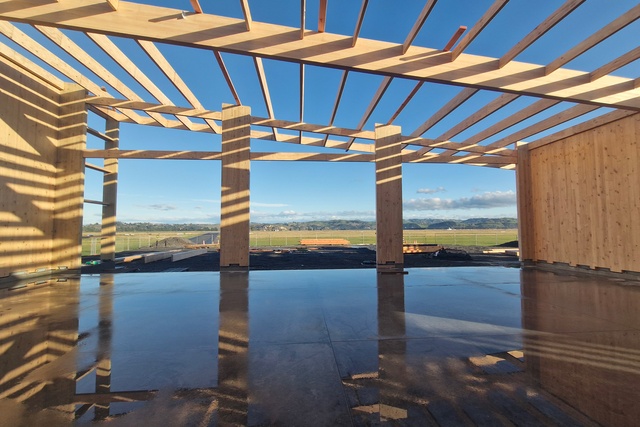
My first day at RTA Studio was setting up a bulk and location study for a new Fire Station at Hawkes Bay Airport, I was fortunate enough to then lead this project from Developed Design through to its completion in December of 2025.
It’s not necessarily a common experience for a graduate to be involved in a project from pre-concept to completion and one that I’m extremely grateful for. Managing consultants, maintaining client relationships and collaborating with contractors aren’t skills you learn at Architecture School. These, along with the complexities of a technical building typology, mass timber structural system, hazardous site conditions all made for a valuable learning experience and a result I’m proud of.
This was also an exercise in learning to trust my gut and not being afraid to make mistakes. Being thrown in the deep end is a sure-fire way to learn to swim — but equally I knew my team were there with a life preserver if I needed it! Two weeks ago, the building was blessed with a dawn karakia. This was a fairly emotional experience for me after nearly three years and a lot of professional growth. To see it now in operation is really rewarding.
The ultimate goal I intend to pursue over the next year or so is registration. I have confidence that the experiences and resources I have access to at RTA have set me up in the best way to achieve this.
AJ: Tell us about your mood board. What does it represent and how did you select the colours?
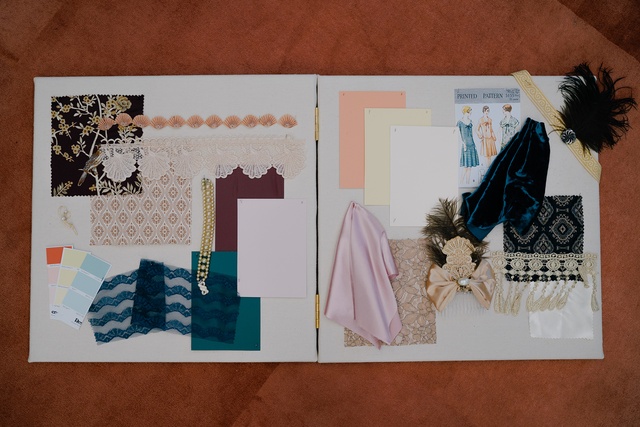
TB: My mood board is representative of what is currently consuming my life outside the studio. Every February, the performance group I’m a part of, The Encore Dancers perform at the Napier Art Deco Festival. This usually means for 2-3 months of the year, my life becomes consumed by the music, dance, art and fashion of the 1920s and 30s. This style triggers a special appreciation and nostalgia unique to growing up in this region.
I started by raiding my dance teacher’s fabric stores, I picked out textures and patterns that caught my eye and started forming a palette of different elements that complimented each other.
The Resene colours are drawn from these fabrics but also from the familiar colours of Napier’s architecture: the buttery yellow and burgundies of the Soundshell and the bright pastels accented with rich deep colours that highlight the decorative motifs of the shops on Tennerson street.
See more from the On the Rise series here.