Ō Rua
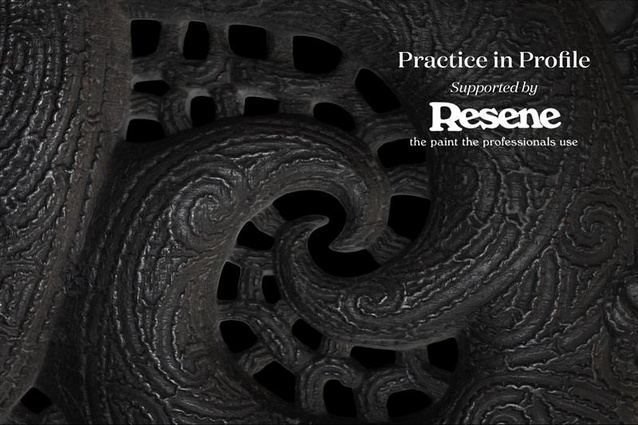
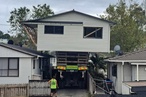
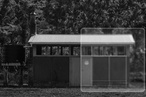
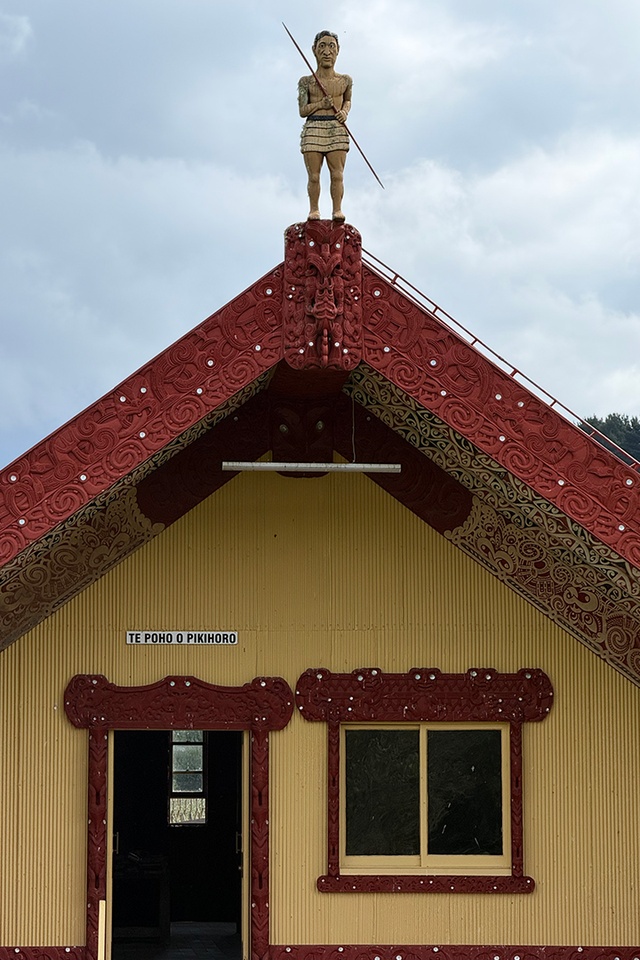
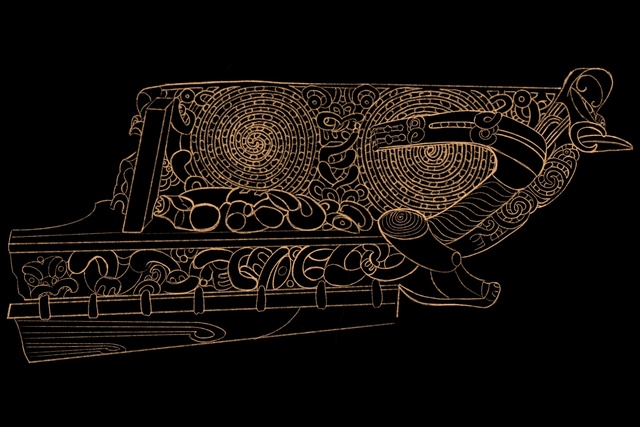
Tairuku Pōtaka, an early 19th-century Te Whānau-a- Apanui pātaka whakairo (carved storehouse), is a direct product of the Whare Wānanga (school of higher learning), Te Rāwheoro.
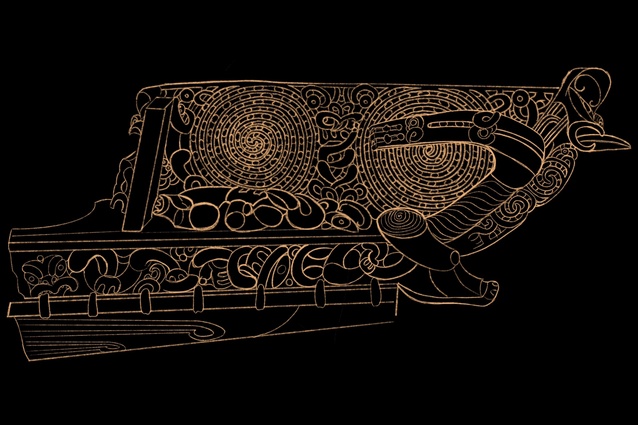
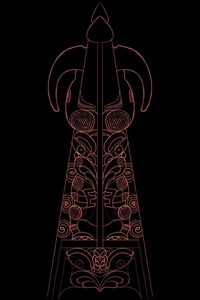
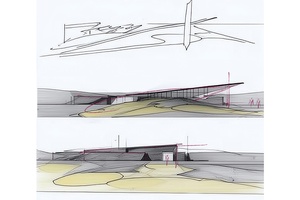
Concept sketch based on a tauihu (carved canoe prow) in elevation, hand drawn by Matekitātahi Rāwiri.
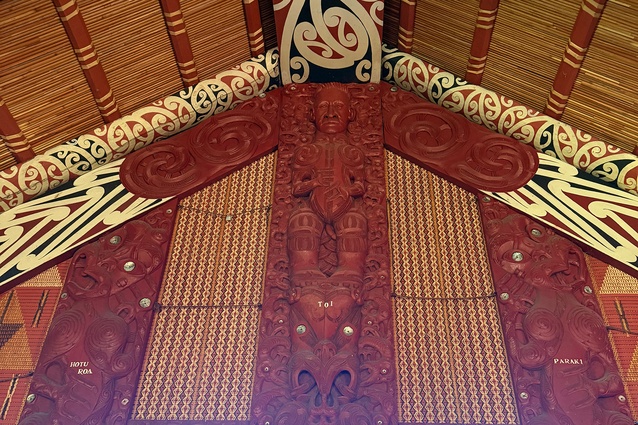
Pou Tuarongo (back wall-pillar of a meeting house) at Takipū Marae, with the carved figures of many paramount tīpuna (ancestors): notably, at the uppermost point, is Sir Āpirana Ngata.
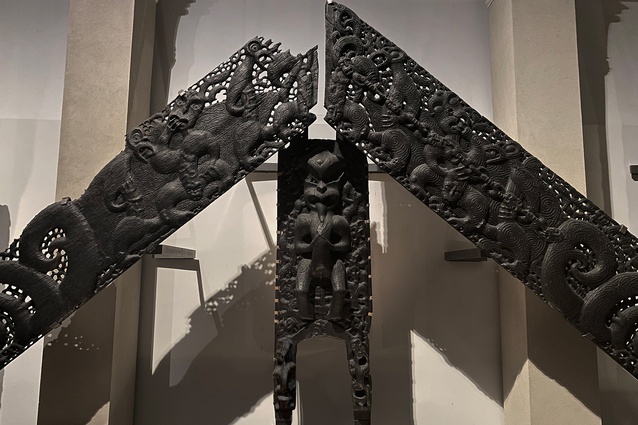
Tairuku Pōtaka, an early 19th-century Te Whānau-a- Apanui pātaka whakairo (carved storehouse), is a direct product of the Whare Wānanga (school of higher learning), Te Rāwheoro.
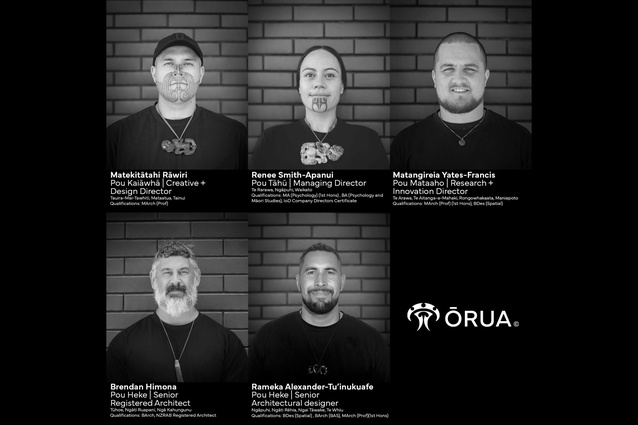
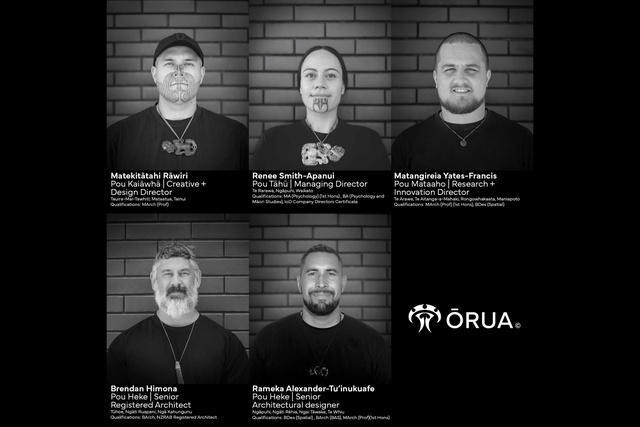
Te ohu a ŌRUA, from top left: Matekitātahi Rāwiri, Renee Smith-Apanui, Matangireia Yates-Francis, Brendan Himona and Rameka Alexander- Tu’inukuafe.
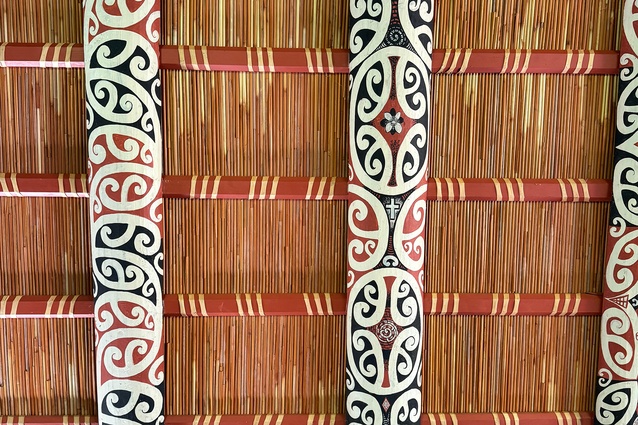
Kōwhaiwhai (painted scroll ornamentation) on the internal rafters of Takipū Marae.
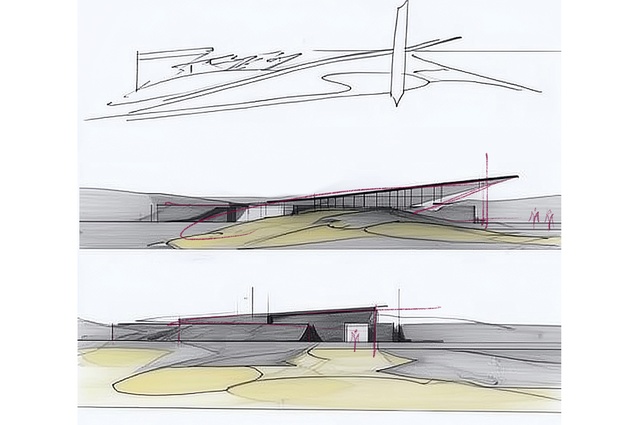
He pākaituna – concept sketches inspired by the kōrero tuku iho, expressing the natural phenomena of the whenua (landscape), such as the writhing movement of tuna (eels) caught in a hīnaki (eel trap).
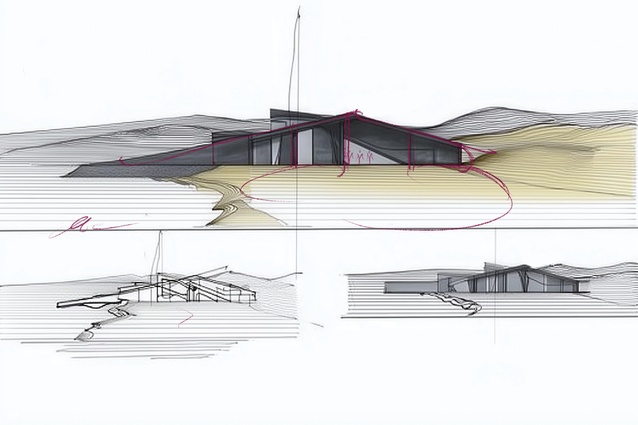
Te Toro a te Kāhu – concept sketches inspired by the outstretched wings of the kāhu (harrier hawk) giving form to the single marae complex, sheltered and protected below.
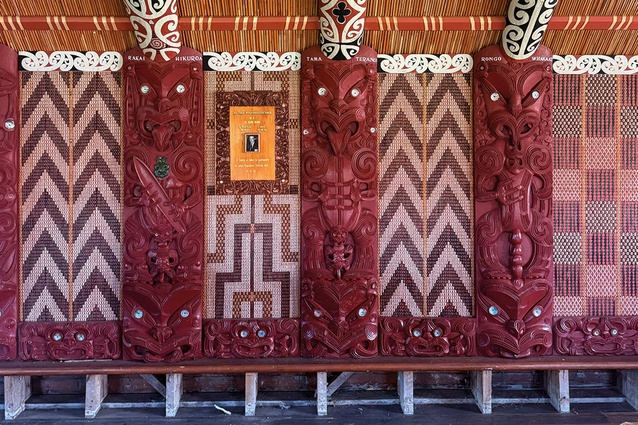
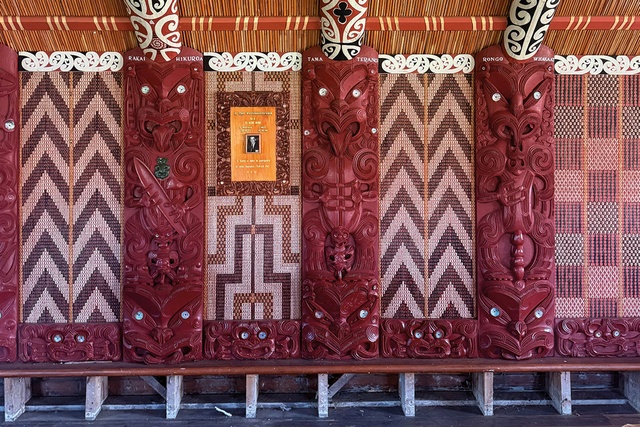
Poupou (carved wallpillars) and tukutuku (woven lattice walllining) on the interior walls of Takipū Marae.
Ki roto i ngā kura huna o te waiata tangi a Rangiuia ka rangona te whakapapa o Rua, e heke iho mai i a Tangaroa. Ko Rua te atua o te mātauranga, te mahara, te wānanga, ā, o te whaihanga anō hoki. Nā konei ka rere mai te ingoa ŌRUA ki te ao mārama. He ohu Māori a ŌRUA e poipoi ana i ngā hanganga o nāianei kia ū ki ngā taonga a o tātau mātua tīpuna – kia Māori te tū, kia Māori te hiringa, kia Māori te wairua. Ko tā ŌRUA, he tū hei wāwāhi tahā, hei whakahihiko i te ao whaihanga kia aro ake, me te whakatairanga i te hoahoatanga Māori kua roa e noho whakaroau.
Within this ancient lament, composed by the tohunga Rangiuia, we find reference to the whakapapa of Rua, a descendant of Tangaroa and the atua associated with knowledge, memory, wānanga, artistry and craft, such as whakairo and architecture. Rua represents not just one figure but an interwoven constellation of knowledge states, researched and revived by scholars such as Dr Wayne Ngata:
– Rua i te Pūkenga – the gathering of knowledge
– Rua i te Pupuke – the swelling, activation and rising of thought
– Rua i te Horahora – the sharing and dissemination of knowledge
– Rua i te Wanawana – the energy and excitement of creative potential.
There are many other manifestations of Rua, each with its own specific expression and domain of the states of knowledge and its dissemination and transmission. One significant origin story associated with Rua is that of Ruatepupuke, who returned from the house of Tangaroa, Huiteananui, with carvings that formed the first models for whare whakairo. This establishes a lineage not only in form but in meaning.
grounds its practice as a living expression of Te Kura o Rua. ŌRUA translates to “of Rua” and carries this lineage deliberately, looking into the deep strata of mātauranga to inform the present and shape the future. Being “of Rua” holds our practice accountable to whakapapa and guides the way we operate.
NGAO I TE KURA – CRAFTING LEGACY
Led by our maxim ‘Ngao i te Kura – Crafting Legacy’, ŌRUA was formed to re-imagine architectural practice from an inherently tangata whenua (indigenous) perspective. As a Māori practice, ŌRUA challenges the prevailing narrative around architecture and business by operating from structure, systems and processes through to design, completely from a Māori world view. We focus on both micro and macro impact: delivering projects that authentically reflect Māori identity while driving systemic, societal and industry-wide change.
ŌRUA recently developed and released the first reports of their kind, Puritia Te Aka Matua, which amplify Māori voices in architecture and landscape architecture and provide a clear road map for change. The reports identify systemic barriers in education and in the industry, while offering actionable recommendations to embed te ao Māori authentically into the field. This work will expand to Māori in the Built Environment, with ŌRUA launching an accountability framework to support this in 2026, to ensure measurable and impactful change into the future.
This authenticity has defined ŌRUA as an industry leader, evidenced by growth during a recession, strong demand from both Māori and non-Māori clients and a formal partnership with the award-winning practice Architectus Aotearoa. This partnership enabled us to deliver large-scale projects country-wide as well as to respond to requests from global entities for potential opportunities.
Through all opportunities, we maintain autonomy to ensure mātauranga remains central and our influence remains equal. The pace, scale and ambition of ŌRUA’s work to date has helped to position us as a world-leading Māori and indigenous practice, shaping the future of both architecture and business.
KA TIPU TE WHAIHANGA – DESIGN PHILOSOPHY
Setting out to reactivate an indigenous approach to architectural design in Aotearoa, ŌRUA draws inspiration from the ancient Whare Wānanga of Te Rāwheoro, originally located in the East Coast region of Uawa, Tolaga Bay. Te Rāwheoro, a traditional school of higher learning, embodied a profound design philosophy rooted in whakapapa, kōrero tuku iho, oriori, karakia and mahi toi, specialising in toi whakairo. In our traditions, the building itself is animated as a living entity connected to the wider environment. Whakairo, and mahi toi in general, was not simply decorative but a pedagogical tool to express whakapapa and cosmology, embedding it throughout the structure through elements such as as poupou, kōwhaiwhai and tukutuku. It was passed down through wānanga as both spiritual and practical knowledge.
Art and architecture are inseparable; they encompass structure, ornamentation, material and cultural tradition through the weaving together of intergenerational knowledge into built forms. This is evident in the intricate design and construction of our whare of old, that connect us to our past, present and future.
We draw on ancestral knowledge systems and translate them into contemporary buildings in this same way, as genealogical embodiments not just for functional spaces but for the materialisation of whakapapa, where structural elements express narrative from ancestors, relationships, events and history of place and people. Secondly, we integrate mātauranga Māori into the design and construction process: integrating artistry and craft into structural and material expression that is meaningful, sustainable and functional. Thirdly, by viewing the building as a living entity, connected to its site, we honour spiritual dimensions and embed them in spatial organisation, circulation and form. Architecture, for ŌRUA, is an act of whakapapa, creation and continuity, where every decision becomes part of the legacy we leave for future generations.
HINONGA – PROJECTS
Cyclone Gabrielle fundamentally changed the landscapes of Te Tairāwhiti (East Coast) and Te Matau-a-Māui (Hawke’s Bay), leaving many whānau with the arduous task of rebuilding on damaged or unsafe whenua. Hinemaurea ki Mangatuna Marae and Takipū Marae are just two such examples where they now must move sites and have approached ŌRUA to help guide them. Beginning this complex process of redesign, relocation and long-term planning is multifaceted, as each marae is the essence of its Māori community and is also the pinnacle of cultural significance and importance. For ŌRUA, these marae represent two distinct yet deeply connected journeys, shaped by tikanga, whakapapa and future-focused design.
HINEMAUREA KI MANGATUNA MARAE – EVOLVING TIKANGA FOR A CHANGING ENVIRONMENT
Repeated flooding has left Hinemaurea with buildings damaged beyond repair and a site increasingly vulnerable to climate impacts. The kaupapa is not simply to rebuild but to rethink what a marae looks like when the whenua can no longer safely support it.
Working alongside tohunga and renowned Māori artists such as Dr Wayne Ngata, Mark Kōpua, Henare Brooking, Lance Ngata and Randal Leach, who are all uri (descendants) of this particular marae, we have engaged in deep wānanga to understand how tikanga can evolve while remaining grounded. Hinemaurea challenges long-held assumptions about marae form, including the ways functions might combine or shift while still maintaining tapu, thresholds and cultural integrity.
This project signals a return to innovation as a Māori norm, reminding us that our tīpuna continually adapted, shaped and reshaped their built environments in response to changing needs.
TAKIPŪ MARAE – HONOURING MASTERY, DESIGNING WITH RESPECT
Takipū presents a different challenge. Its wharenui, carved under the guidance of Sir Āpirana Ngata by masters Hōne and Pine Taiapa, is considered a masterpiece of Māori art and architecture. Our role is to relocate this heritage building of great significance and design the auxiliary marae buildings, such that they honour this legacy and accentuate the connection of the past and the present while fundamentally maintaining the importance of cultural identity for the new marae.
The work requires a delicate balance; our contemporary architecture must complement the whare whakairo craftsmanship and not compete with it. This project demonstrates the ways in which modern design can sit confidently alongside traditional artistry when guided by tikanga and intentionality.
TŪ ANA KI TE MARAE, TAU ANA – TRADITION MEETING INNOVATION
Together, Hinemaurea and Takipū represent the spectrum of Māori architecture today. One calls for adaptation and new forms derived from the old, while the other demands reverence and precision of the past. Both require design excellence. ŌRUA supports each marae to rebuild not just through built form but also through identity, resilience and intergenerational legacy. It is not just about the physical building but about our processes and the ways in which we honour ourselves culturally and spiritually throughout. Our ancestors held architecture in high regard, recognising the significance of every aspect of construction. Our tīpuna adapted to new environments and we, too, must enable the foundational principles of tikanga to guide us through contemporary challenges.
Both projects affirm that tikanga is not static. It evolves with people, place and context and therefore, for ŌRUA, as a contemporary Māori practice, we have an integral responsibility to understand and help shape this changing form. These are not simply recovery projects; they are opportunities to shape the future of Māori architecture. We do not see this as a debate between classical and traditional versus contemporary and modern; we believe that we are a continuation of the whakapapa and legacy that has come before us and the future that will follow.
TITIRO WHAKAMURI, KIA ANGA WHAKAMUA – LOOK TO THE PAST IN ORDER TO MOVE FORWARD
As we head forward, the question is no longer: “How do we include Māori in architecture?” It is: “How can an indigenous world view transform architecture?”
The future of innovation is cultural. The future of sustainability is indigenous. The future of architecture is relational, localised, data-informed and identity-driven. And being Māori brings all of these things. Our ancestors built vessels that circumnavigated the oceans. Today, we design and build structures that will shape and influence us here in Aotearoa into the next century. Our role at ŌRUA is not only to preserve the past but to activate it: to translate ancient knowledge into forms that shape our world today.
Ngao i te Kura.
ŌRUA is a kaupapa Māori practice imbued in mātauranga Māori, driving innovation and progressive change to inspire and foster Māori excellence and influence in the built environment of Aotearoa. Our aspirations and work prioritise te ao Māori across systems, structures and projects, challenging an area that has long restricted authentic Māori expression. ŌRUA exists to lead this transformation and redefine the status quo in the built environment.