Holding memories
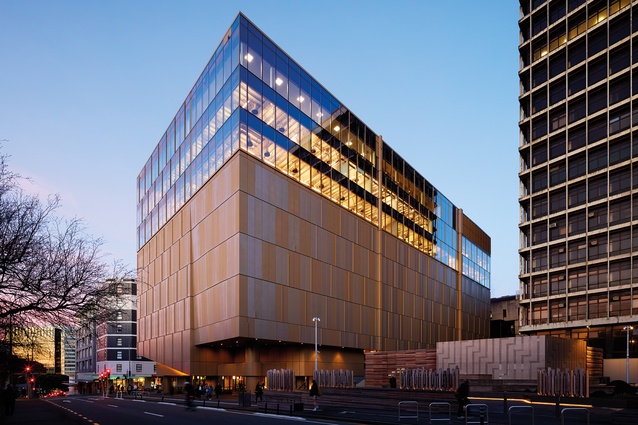
The imposing bulk of Te Rua clearly delineates between the objects secure in the darkness below and the well-lit spaces for the people up the top.
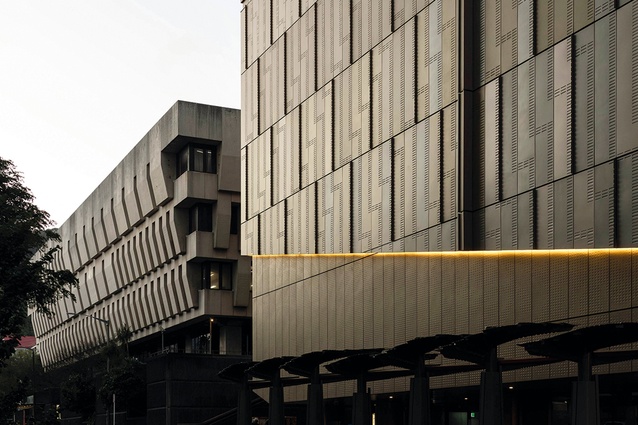
Visually, although twice the size, the new block still lines up with the bulk of Te Puna National Library.
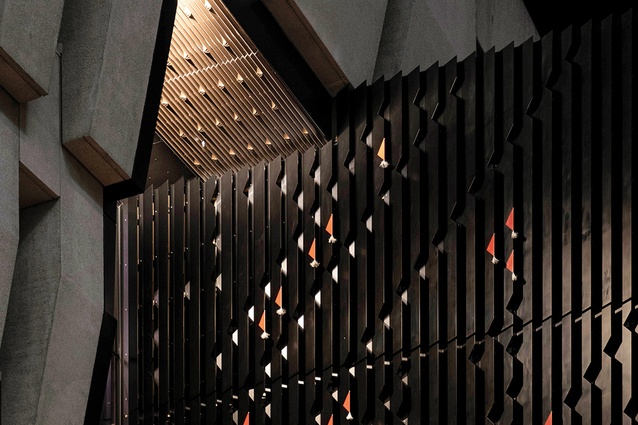
Te Hono, the linking element between the two buildings, has a big job to do – one day.
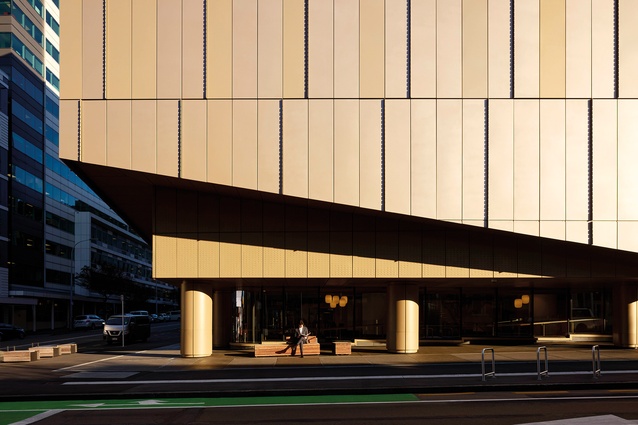
Crisp detailing and sculpting of the exposed underside, features pipi.
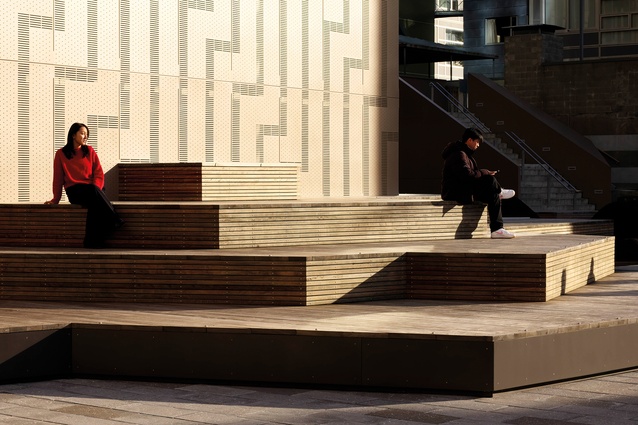
Weaving of the building and the public spaces brings the Pipitea site back to life.
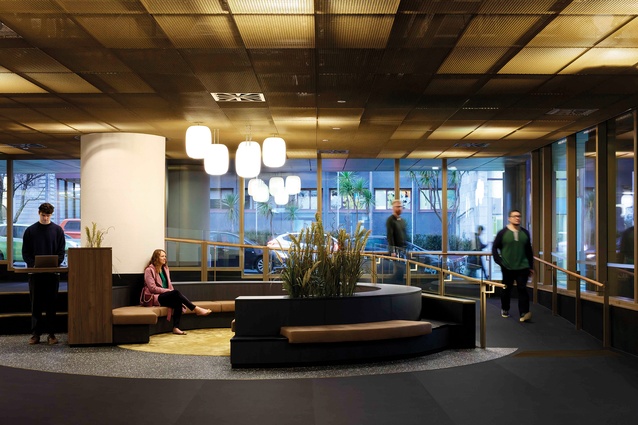
Dark floors and gold mesh ceiling above frame the ground-floor lobby as a special public ātea.
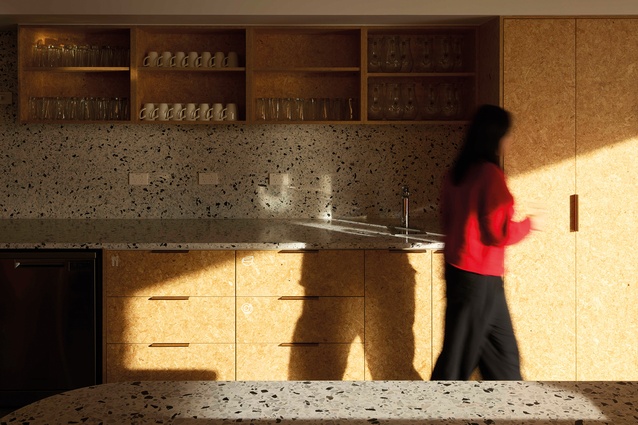
Staff facilities are spartan, in keeping with the cardboard box aesthetic of the storage racks.
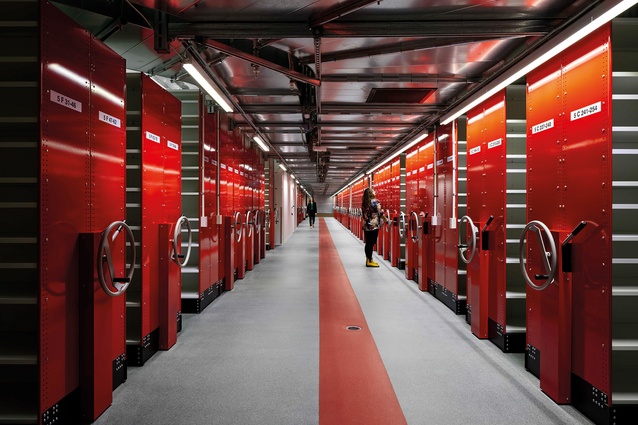
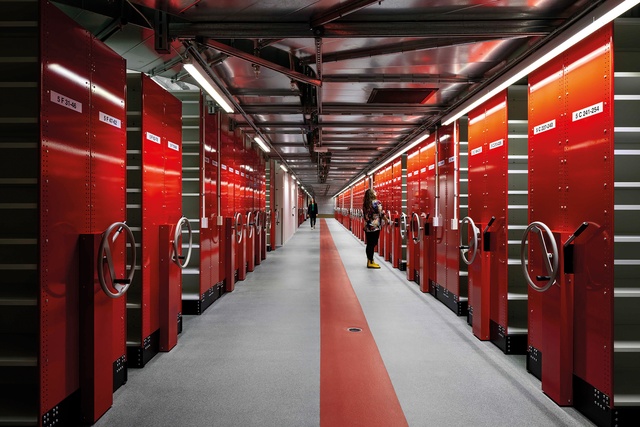
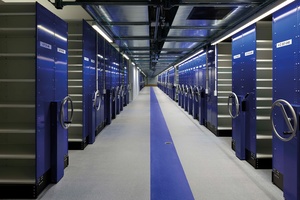
Archives rolling stacks are efficient and colour-coded. This is a no-nonsense facility.
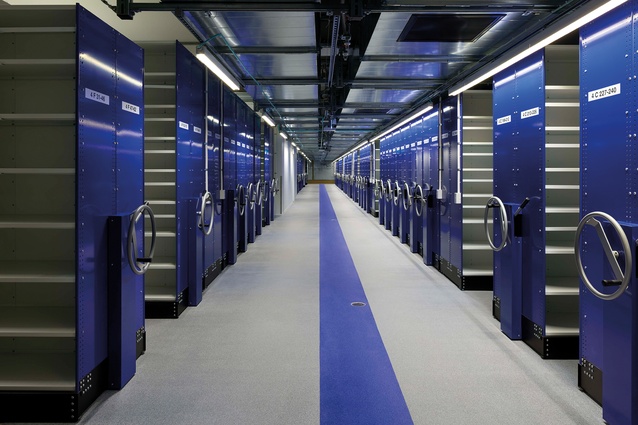
Archives rolling stacks are efficient and colour-coded. This is a no-nonsense facility.
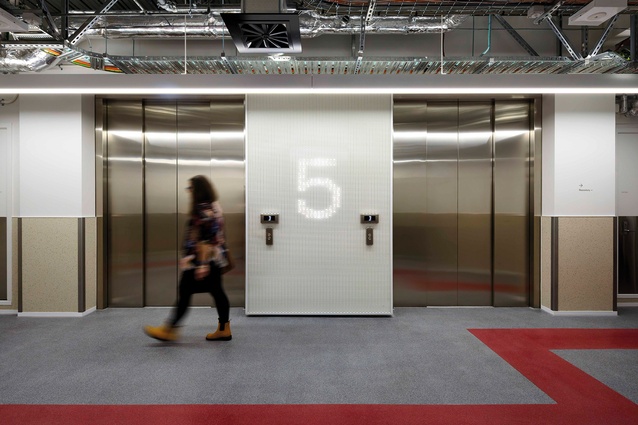
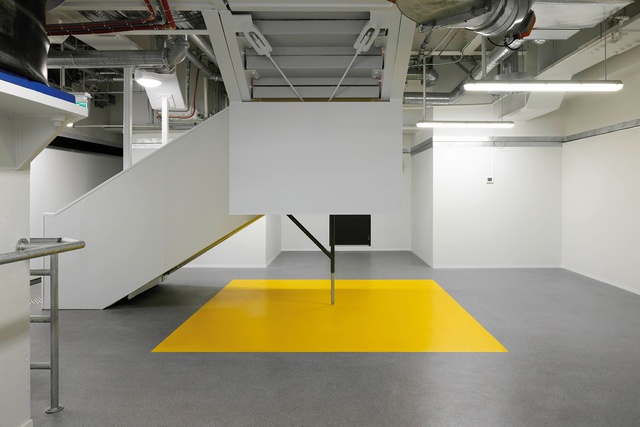
The lift bank is spartan and functional; no ceilings are necessary.
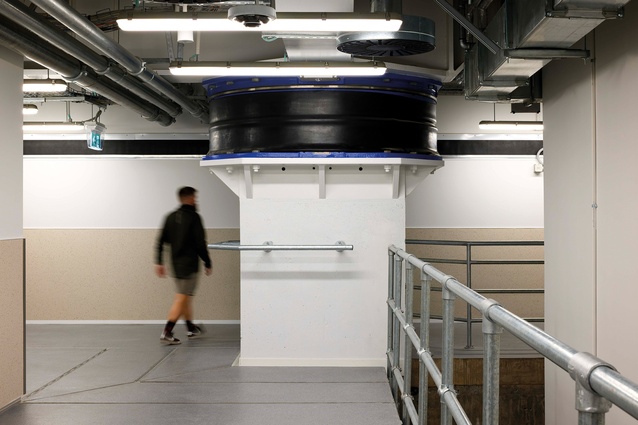
Triple-pendulum base isolation will sway from side to side in the worst possible quake.
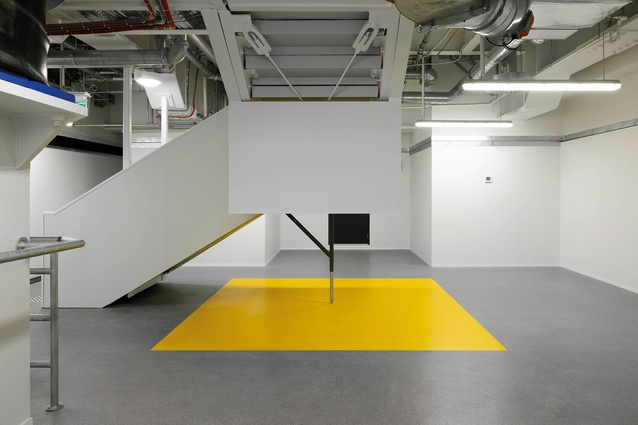
The Hand of God will manifest itself via God’s Pencil, scribing any movements that occur in the building from any future oscillations.
Guy Marriage navigates the $290-million Te Rua Archives New Zealand in Wellington, the magnificently sculpted, base isolated and airtight storehouse of our country’s culture by Warren and Mahoney in collaboration with Tihei, led by Rangi Kipa.
How do you remember things? Do you file them in your mind under fleeting moments and forget them over time, only for one of them to pop back up to the surface many years later at the sound of an ice-cream truck as it comes down the road? Do you have a collection of ephemera buried in the back of a drawer? Do inconsistencies in memory recall creep in to muddy the waters?
How then to provide a foolproof way to file away an entire nation’s memory, even one for such a young country as ours? What about trying to remember the stories of two peoples sharing one land, and their efforts to live together? One way is with a national archives building, a repository for everything we want to remember as well as some battles we might rather forget. Tangata, people. Whenua, land. Stories of conflict and comradeship. A building containing a nation’s conscience, waiting patiently for the rest of time.
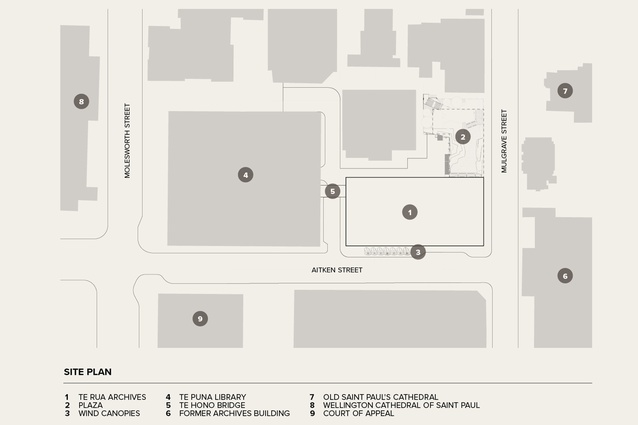
Te Rua is a vast new building that stores the nation’s treasures, on Aitken Street in Wellington. This building is an important addition to our country, built on traditional Te Āti Awa land near Pipitea Pā. It is arguably the most important bicultural building in town: more important than Parliament, less confusing than Te Papa. It sits as a vast pātaka, a storehouse of memories.
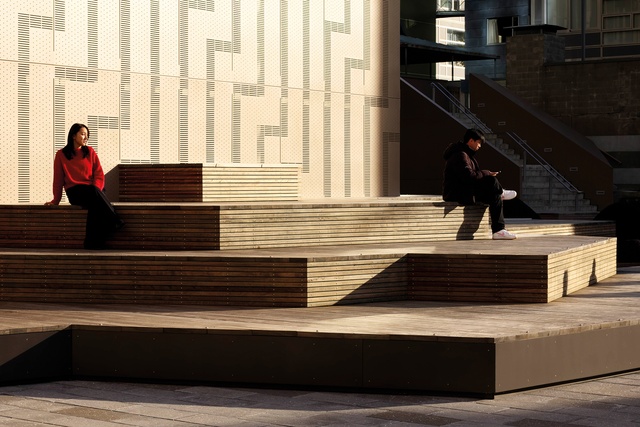
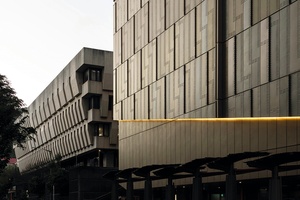
Te Rua was co-designed in a collaboration between Tihei sculptor Rangi Kipa and architects Warren and Mahoney. This means that the considerable effort of crafting the external shell of this giant building was baked in from the beginning, not just applied at the end like icing on a cake. It is covered from top to bottom in tukutuku patterning, that can be read at different scales. From far away, it looks like a patterned zigzag (poutama), at mid-range it appears in a subtle three different shades of bronzed gold pushing back and forth, while, close up, thousands of small shapes like chiselled tohu can be seen adorning each panel. The bottom edge of the box is tilted upwards at each end, slashed with a strip light that points to the main entry. Below the line, pipi are featured. The pipi motif refers back to the site’s original purpose as a place to find kaimoana, as does the name Rua, after the nests for the kororā penguins living nearby. Rua can mean storage pit, but it can also mean two. It is the archives, after all, for everyone.
For a project so large, it is surprisingly well hidden, nestled amongst other government buildings, sitting up on massive solid legs, but the building also references waka huia treasure box, a treasure chest full of dowry, a ship in dry dock or a gold-plated Sherman tank. It is a weighty beast of a box: the height of a nine-storey building but with the weight of a 30-storey tower, with the belly exposed from the underside, beautifully sculpted. Below ground, the columns rest on 36 of the most technologically advanced base isolators that exist in Aotearoa, triple-pendulum friction bearings each 2100mm wide, themselves balanced on massive concrete piles 55m long. Te Rua is located on the same site as the former Defence building, demolished after the 2016 Kaikoura quakes, so it takes some raho to propose that this should be the same location for our ultra-safe, long-term gestation of every memory the country has, but these features guarantee that the building is not going anywhere.
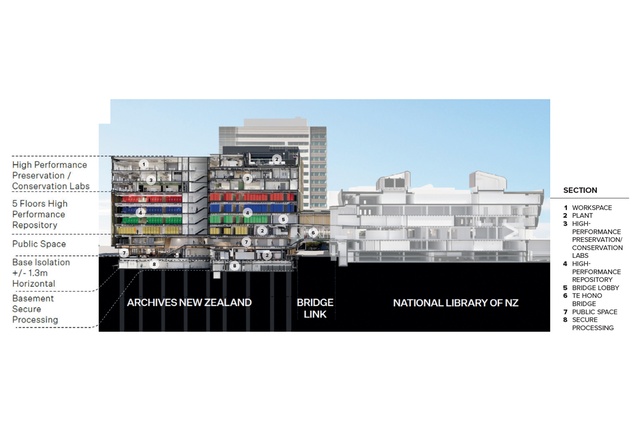
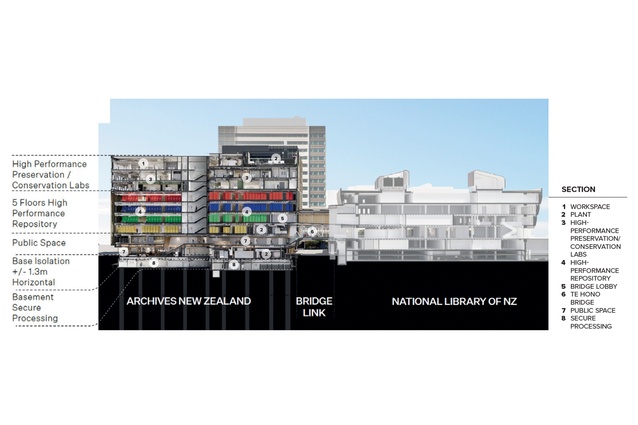
The premise of the building is relatively simple. The basement contains items such as the base isolators, mechanical kit, including such luxuries as a double sprinkler system, backup generators and a water supply for firefighting. Being sited just a stone’s throw from the train station and bus interchange, there is parking for only three cars. I suspect it should withstand everything except for a full-scale nuclear war. Donald and Vlad willing, we should escape that, too; this has the most sophisticated archive humidity system in the world.
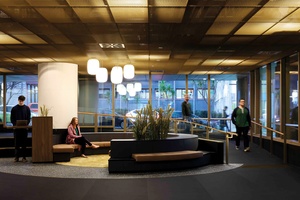
Ground floor welcomes everybody and everything with glass walls, ready to admit tour bus loads of school children to see through the facilities. It will be the space where welcomes are made, wero are laid, and visitors are logged in before ascending to the upper floors. The surface of the ground is coloured black, representing the tūāpapa, with the ātea the space between this, and the weight of the collection elevated above. As a result of the potentially prolific movement of the base isolation, the entire ground floor is surrounded by a moat, carefully covered over to present a smooth and seamless surface, much like our race relations record.
The next four-and-a-half floors up are all storage for the massive number of actual objects in the collection, some 750,000kg of items. Giant racks of shiny Precision rolling shelving extend off into the distance; all are gradually being filled with precious cargo in brown cardboard boxes. On top of the storage floors sit two floors of wet/dry labs, facilities where the staff can clean, restore, preserve and otherwise make good and digitise pieces in the archives, along with audiovisual recording booths. The very top floor is reserved for the lucky few people who work there and stunning views out over the harbour will tempt them from their computer screens.
You may well be asking where will the people who use the archives go? Despite my assumption that the public would be situated on top of the pile, enjoying those stunning views out, the simple answer is that in the new configuration Te Puna is next door to Te Rua and so the reading rooms will be situated in the National Library, with a connecting link bridge.
The two institutions are collaborating well together these days. The most prominent and well deserving of these collaborations is the Treaty of Waitangi, resplendent in its beautiful He Tohu crafted timber room at the National Library. Archives have artefacts in archival boxes and libraries have books although, of course, much access these days is completely digital and, sometimes, the actual object lies untouched for years. Digital objects do not, of course, require such a building — just a file somewhere on a server, in a format that hopefully will not require updating. The current government has cancelled further digitising.
Those of you who have been paying attention so far will spot a potential problem, with the white concrete inverted ziggurat of the National Library held firmly in place on a solid, non-moving base. This is joined by a double-height link bridge to the new neighbour, whose fantastic triple-pendulum isolators let it move around by up to 1300mm in every direction. That’s potentially a real nightmare during a quake, as the link bridge conveys the lifeblood of the archives to the library reading rooms and has to stay working every day, with or without an earthquake. Studio Pacific designed the receiving structure and interface for the new Warren and Mahoney bridge link to the National Library with the beautiful screen designed by Tihei poised to concertina back and forth between the two on a one-in-1800-year temblor. Hopefully, none of us will ever see it do this.
In perhaps a departure from the way we used to do things in Aotearoa, on this project, the government will not own the building. Instead, Te Rua is delivered by developer Dexus in partnership with the Department of Internal Affairs, with support from international funding investors, with ownership of and long-term responsibility for not just the building but the yearly bills for upkeep, too. Being part of the development team has meant that Dexus has ensured the building is built well, with extremely low running costs. This is no easy feat, as the Thermosash façade has to be built to the highest possible quality levels, with air infiltration kept to an absolute minimum. Because this is an archive, changes in temperature and humidity are seriously frowned upon, so the standard mullion and transom profiles had to be redesigned to achieve a result of far higher quality. The interior storage facilities will vary by no more than +/– 1ºC, with absolutely constant humidity no matter what the weather is like outside and will even keep functioning and stable for 48 hours solid if the power is cut. Ownership issues aside, the ethics of paying for your memory space from now until the end of time is something that I wonder at but, like everything else, we’re largely owned by overseas investors now.
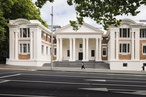
Most of us are going to experience Te Rua from the outside only, I suspect, so the building will be judged primarily from its external appearance. The combination of an L-shaped site and a resolutely rectangular building means that the foot of the L has been crafted into a new public square: a nice place to sit and have lunch perhaps, looking out across to Thatcher’s Old St Paul’s church. Te Rua’s golden bulk is a sculptural object with nearly all sides exposed to view and so Kipa’s work on incising the skin of the building with tattoo-like patterning means that the building will keep speaking to us, if we listen. Kipa’s work on the project as a highly accomplished artist, sculptor and tohunga ta moko, means that his incorporation of Māori motifs and references to genealogy are slipped seamlessly into the building and its surroundings. Take your time to wander round and encircle the building, with its Māori poem scribed externally, pipi patterning and bright red lightning strike on the façade, and make sure you visit one day, to search out your past. You never know what you might have forgotten.