Five years, five lessons: The Pacifica
The building includes 273 apartments.
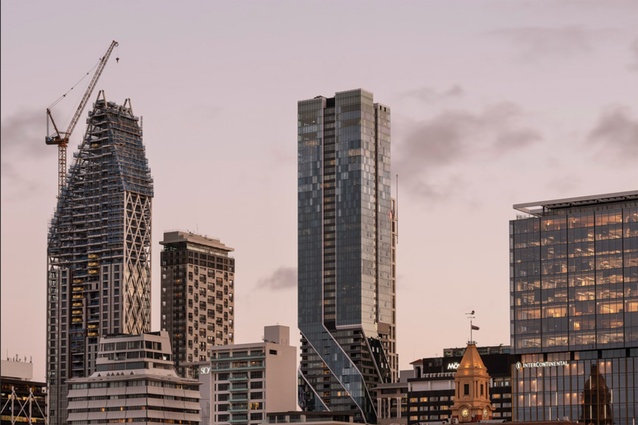
Plus Studio notes that “the twisting totem-like design on the building’s exterior resembles a traditional Maori Pikorua.
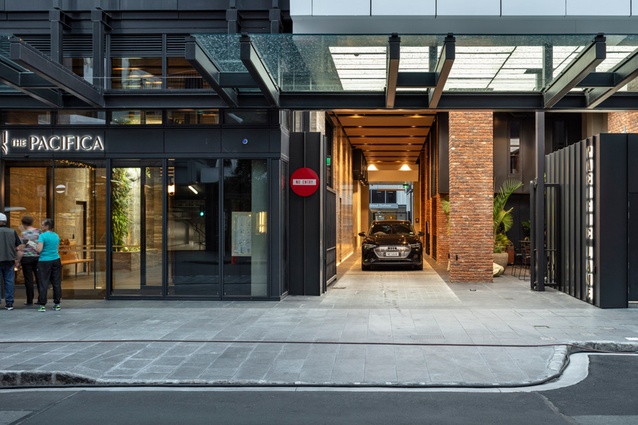
The Pacifica extends Auckland’s laneway culture, a deliberate civic gesture that stitches the tower into the surrounding warehouse quarter.
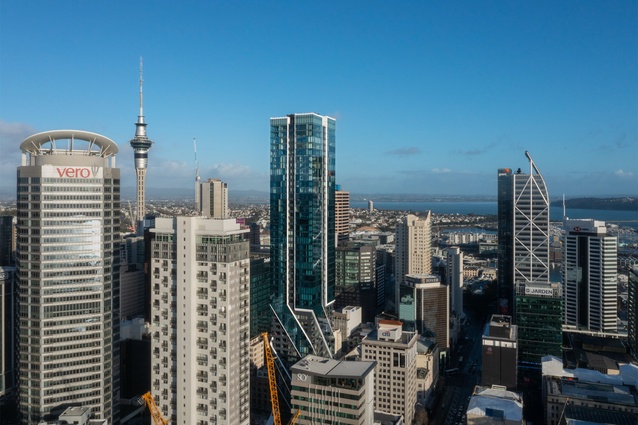
Site constraints drove structural innovation, with parking lifted into the podium and a perimeter mega-column system that avoided the risks of deep excavation on reclaimed ground.
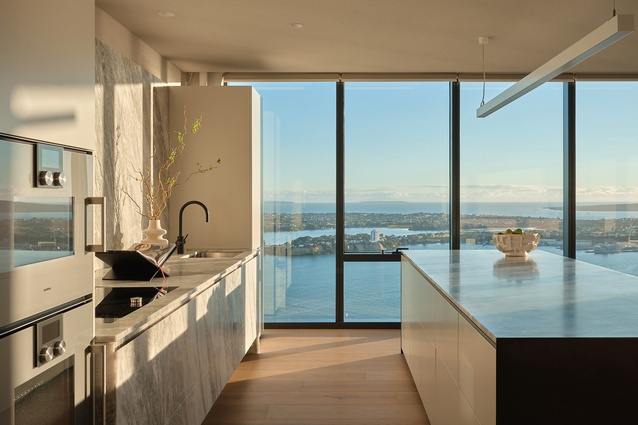
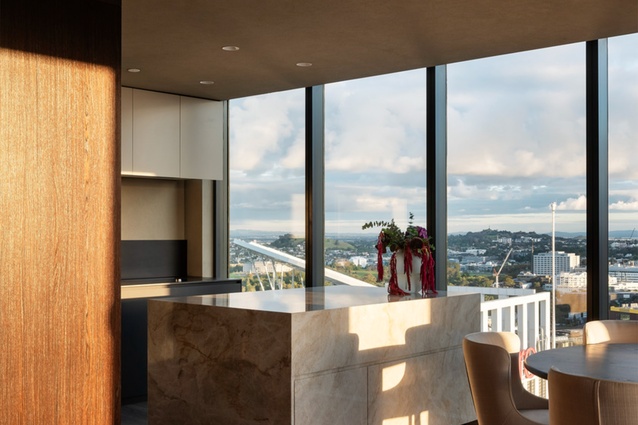
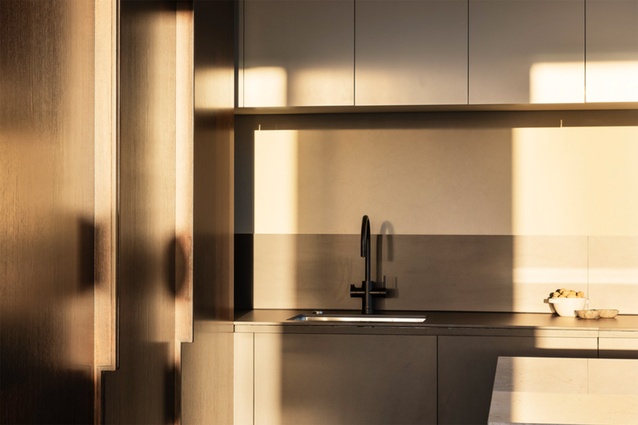
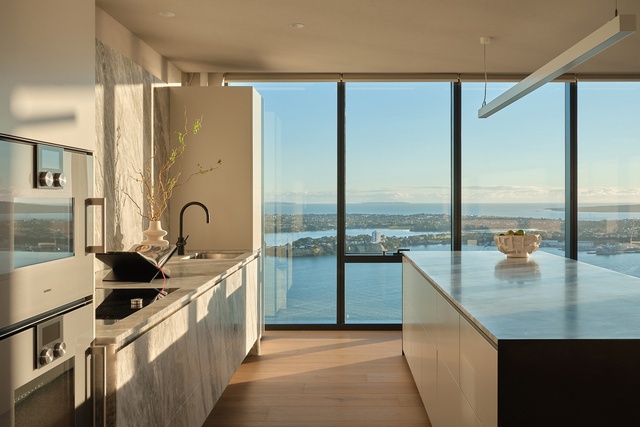
Floating kitchens with recessed lighting and timber grain interplay 178 metres above Britomart — interiors developed through trans-Tasman collaboration within Plus Studio.
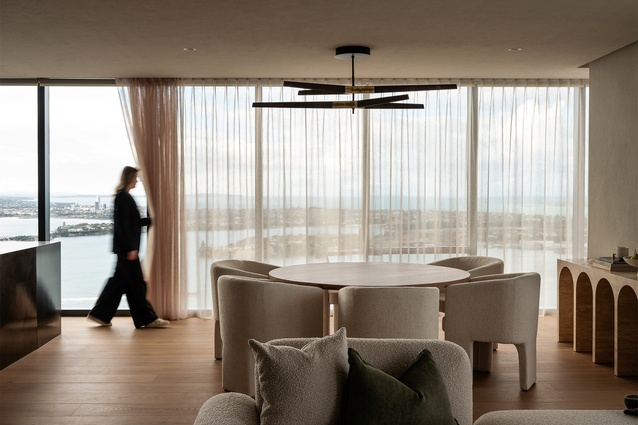
The curtain wall frames the uninterrupted view of the Waitematā Harbour from the 54th level of the Pacifica tower.
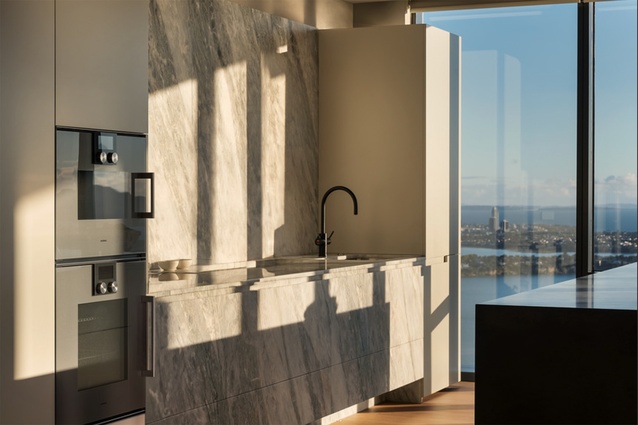
The cantilevered back bench is framed by nearly full-height two-pack joinery in a shade lighter than the ceiling and wall paint finishes.
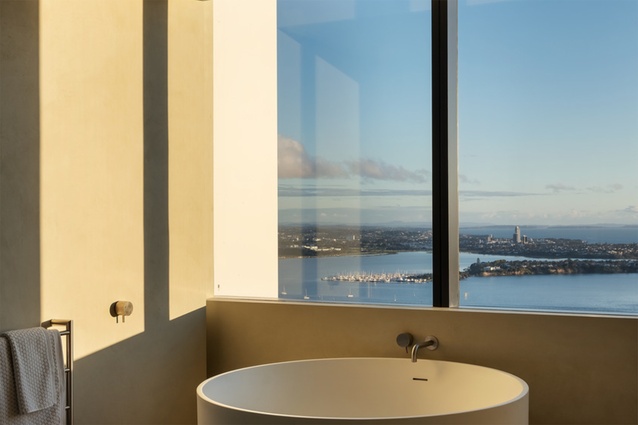
Walls in Marmorino limestone plaster and porcelain ceramic slabs on floors create a neutral backdrop for high-end bathroom fixtures and pristine bay views.
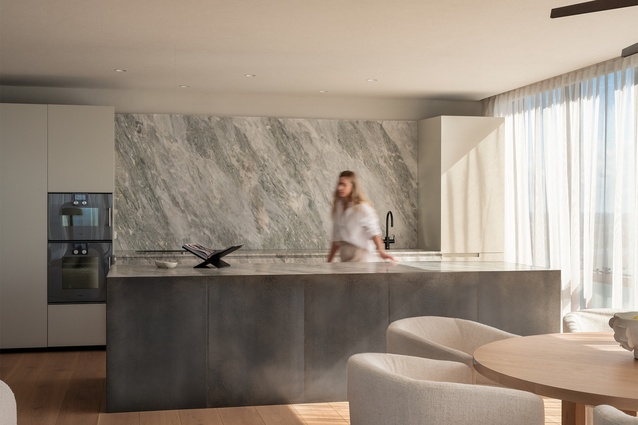
Morning sun casts a soft glow on the subtle pastel tones of the zinc-clad island bench and the quartzite stone splashback.
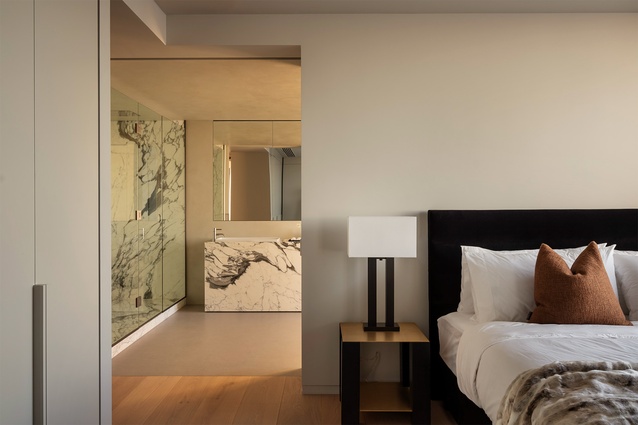
The carved entry into the main ensuite frames luxurious Calacatta marble slabs that are incorporated as sculptural insertions.
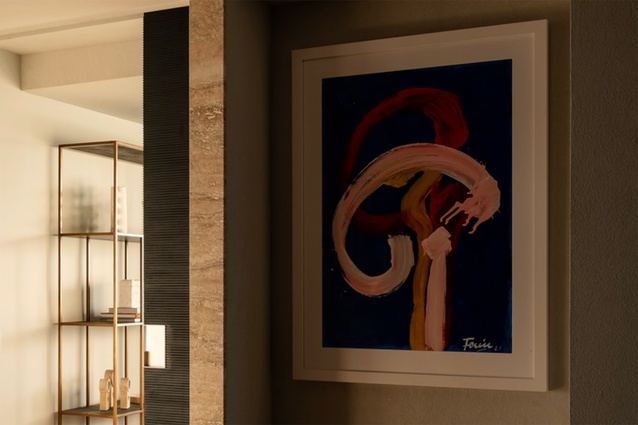
Thoughtfully placed niches create interest, framing works of art and increasing useable space in interstitial zones.
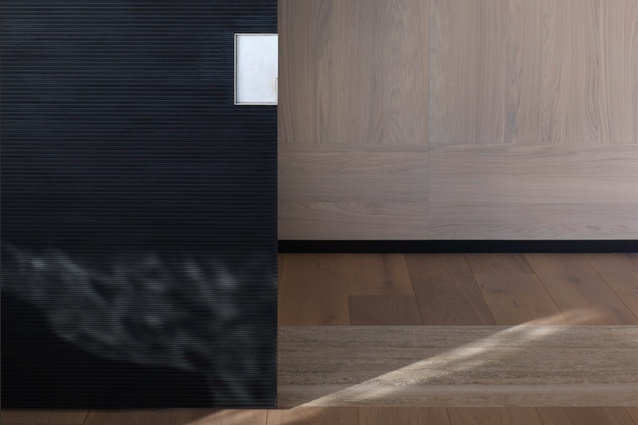
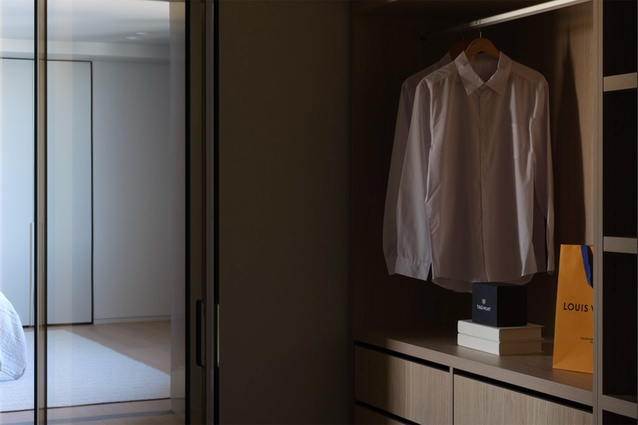
Space-saving and stylish inbuilt wooden veneer cabinetry provide a seamless and easy-assess wardrobe solution.
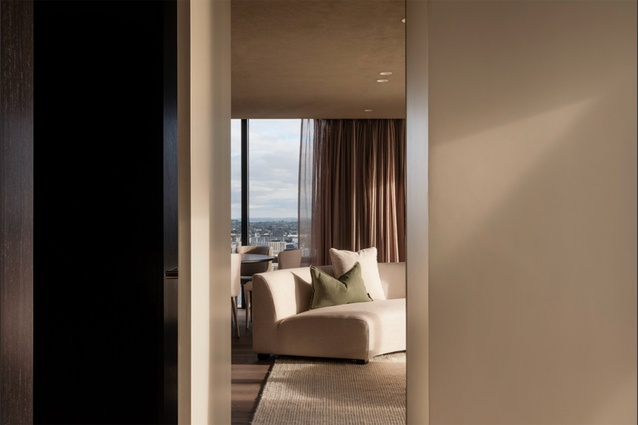
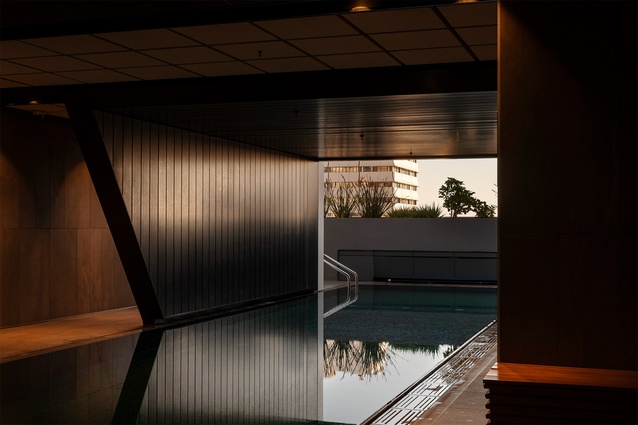
Amenities inside The Pacifica include a heated lap pool, sauna, steam room, spa, gym, media room, residents’ lounge, library and barbeque terrace.
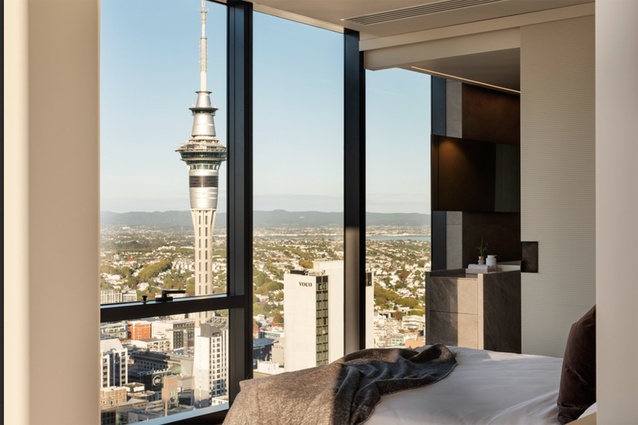
The CBD is the backdrop for life via floor-to-ceiling glazing that provides views over the isthmus from dawn to dusk.

The Pacifica’s approach to vertical communities and climate-responsive design has fed back into Plus’s Australian projects, creating a genuine two-way exchange between studios.
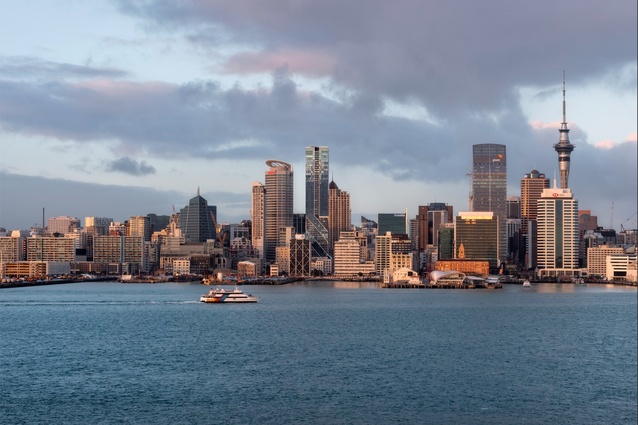
Five years after completion, The Pacifica — the 178-metre, 57-storey tower designed by Plus Studio for Hengyi — has become one of the most recognisable figures on the Tāmaki Makaurau skyline and a reference point for density in Aotearoa.
Positioned one block back from the Waitematā Harbour and Britomart, the tower’s more than 270 apartments have maintained strong occupancy and consistent demand since 2020. For developer Hengyi and the Plus Studio team, The Pacifica was never just about claiming a height record — it was a live test of what climate-aware, community-minded apartment living could look like in Auckland, and how a tall building might contribute to the city around it.
As the project marks its fifth year, Hengyi and Plus Studio are reflecting on what worked, what they would approach differently, and how those lessons are shaping the next generation of high-density projects on both sides of the Tasman.
Lesson one: Quality, amenity and care over sheer floor area
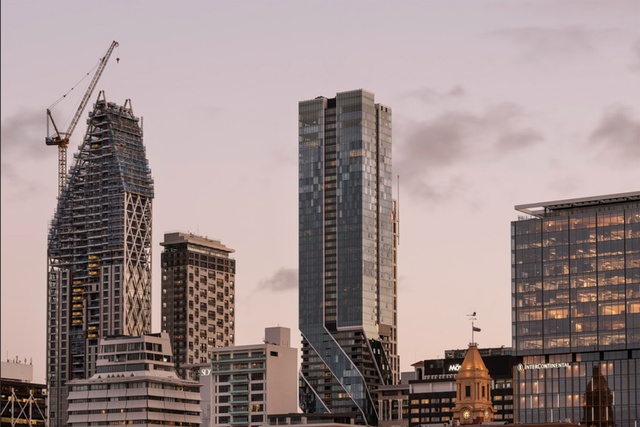
Hengyi General Manager NZ, Steven Peng, says the project confirmed a clear shift in how New Zealanders think about density, “New Zealand’s cultural attachment to standalone homes runs deep. Plus Studio learned that people aren’t rejecting density — they’re rejecting poorly designed density.”
That belief drove a series of decisions that privileged liveability over yield — enclosed winter gardens that slightly reduced net area but created flexible, weather-resilient living space, a generous suite of wellness and social amenities and planning that emphasised long-term comfort over short-term return.
“This project has become a reference point not because of its height, but because it demonstrates what becomes possible when you invest in the people who’ll actually live there for years,” Peng adds.
Lesson two: Designing the ground plane as civic infrastructure
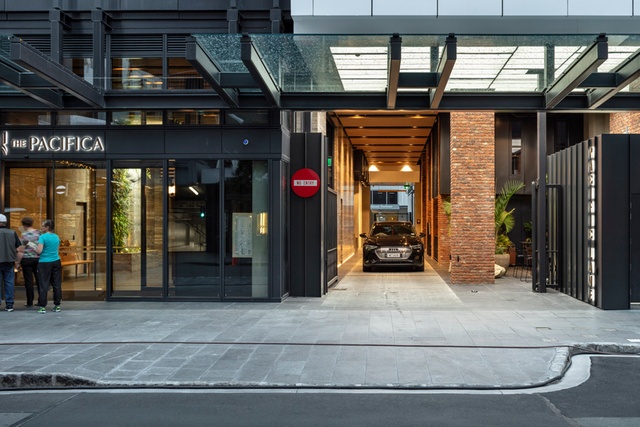
Viewed from afar, The Pacifica reads as a clear figure in the skyline — a twisted, glass-clad tower catching the harbour light. At the same time, it extends a long-standing focus within Plus Studio’s work — the ground plane as the primary interface between building, street and community.
Plus Studio Director Ian Briggs, who led early design development, says, “The temptation with a project this tall is to focus on the silhouette and the views. But people experience the building every day at ground level — that’s where it either contributes to the city or detracts from it.”
At The Pacifica, that thinking translated into a through-link and active podium edge that extended Auckland’s laneway culture through the site, prioritising urban connectivity over maximising ground-floor commercial area. Five years on, this link has become part of the city’s everyday infrastructure — a fine-grain network that stitches the tower into the surrounding warehouse fabric and public realm.
Lesson three: Turning constraints into structural intelligence
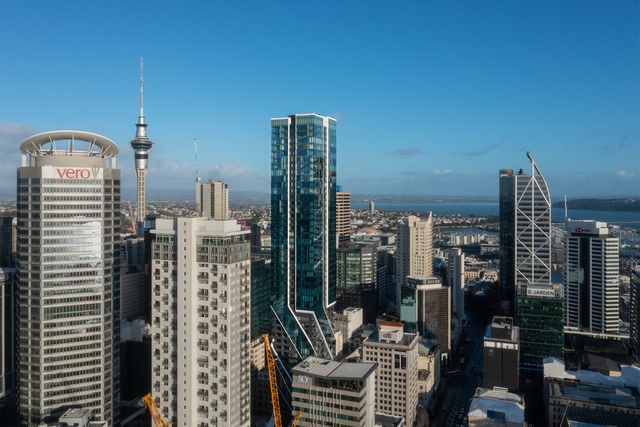
Technically, The Pacifica arrived with a familiar but demanding set of challenges — reclaimed ground, a high water table and a tightly constrained CBD site that made a conventional multi-level basement slow and risky.
Instead of digging down, Hengyi, Plus Studio and builder Icon lifted parking into the podium —wrapping it with commercial offices — and adopted a perimeter “mega-column” structure tied back to the tower core. Post-tensioned slabs and a jump-form core helped accelerate construction and expanded local capability in delivering complex high-rise projects.
Plus Studio Director Hamish Davies, based in Auckland, comments, “Auckland’s CBD context meant we had to think very carefully about how structure, program and constructability worked together. Five years on, that approach has become part of our toolkit for constrained CBD sites.
The lesson is that site constraints don’t limit design — they force you to find better solutions than the default would have given you.”
Lesson four: Local identity through embedded collaboration
The Pacifica’s interiors and apartments were developed through a tightly integrated collaboration between Plus Studio’s Melbourne and Auckland teams, together with local makers and suppliers. Working across both studios sharpened the project’s response to climate, light and material culture.
Plus Studio Associate Ivonna Golubovic, who led interior design, says, “Designing between two cities meant constantly testing what felt genuinely specific to this site, this harbour and this climate. That dialogue across studios helped us avoid a generic high-rise model and arrive at something that belongs in Auckland.” Natural materials and slightly darker timbers respond to Auckland’s exposed climate and atmospheric light, while narrow-framed glazing captures harbour and city views without losing a sense of enclosure. Winter gardens act as a buffer at the threshold, allowing residents to adapt to changing wind and weather conditions.
For Plus Studio, the process underscored the value of co-creating with clients, consultants and local communities to arrive at a solution that feels specific to place rather than imported.
Lesson five: A genuine trans-Tasman feedback loop

While The Pacifica has helped normalise vertical living in Auckland, its influence hasn’t been one-way. The project’s thinking around vertical communities, amenity placement and climate-responsive elements such as winter gardens has since informed Plus Studio’s Australian work.
Briggs comments, “For us, The Pacifica was one of the first projects where we were really explicit about designing a vertical village. That mindset has since travelled back into our Australian projects as well. The exchange has been two-way — Auckland has benefited from established density experience, and Pacifica has fed back into how we talk about density and community on our side of the Tasman.”
This ongoing cross-pollination between studios and cities reflects Plus Studio’s commitment to combining technical knowledge with lived experience and empathy for how people actually inhabit buildings over time.
Looking ahead: What The Pacifica’s first five years tell us
For Davies, The Pacifica’s legacy is as much cultural as it is technical, “New Zealand has never been entirely comfortable with density. The Pacifica didn’t resolve that tension overnight, but it did prove that tall living here can be climate-aware, contextually specific and genuinely desirable. That’s why it still matters — not only as a landmark in the skyline, but as evidence of where Auckland is heading as a city.”
The lessons learned from The Pacifica are already informing a new generation of projects across Aotearoa and Australia. They suggest that when tall buildings are conceived as long-term communities, grounded in local character and delivered through genuine collaboration, density can become not a compromise, but an aspiration.