Empowering the diaspora
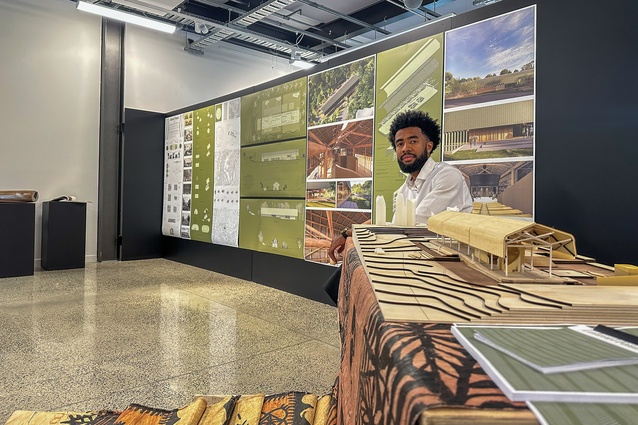
Mila Makasini with his project Lalava’i Fonua, exhibited at Otago Polytechnic School of Architecture.
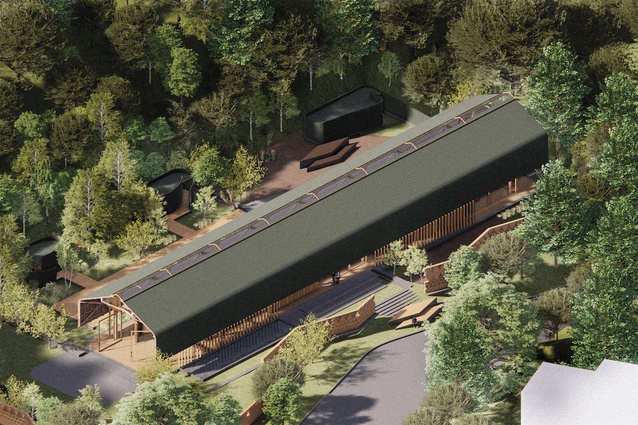
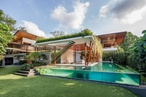
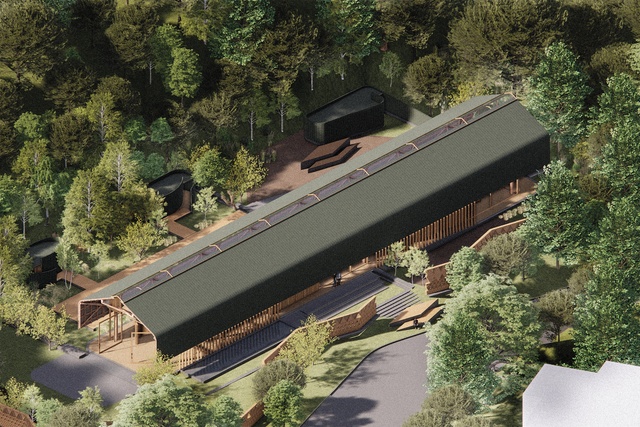
Aerial vista of the fale complex.
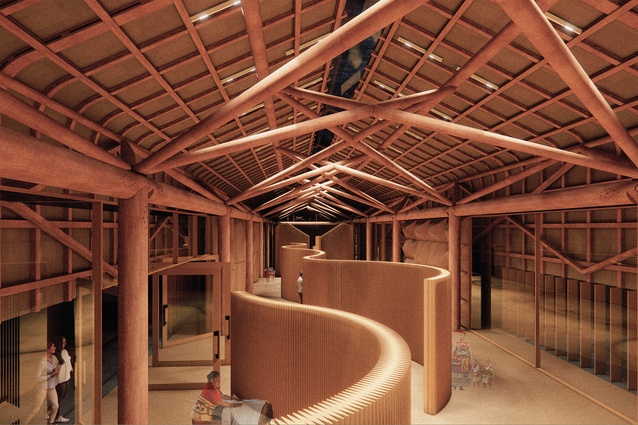
Interior of the fale: temporary screen walls on display below and the lofted roof structure system illuminated above.
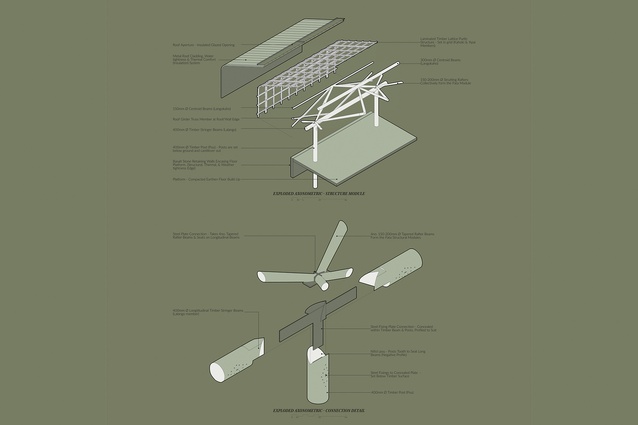
Tectonic detail: a contemporary transformation of the classical post-and-beam arrangement.
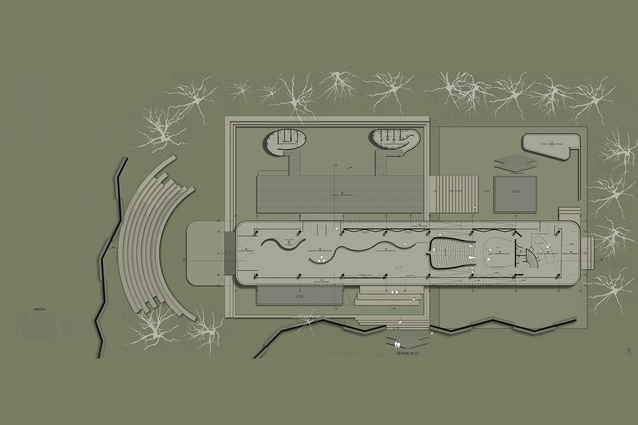
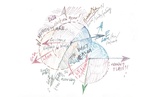
Fale floor plan.
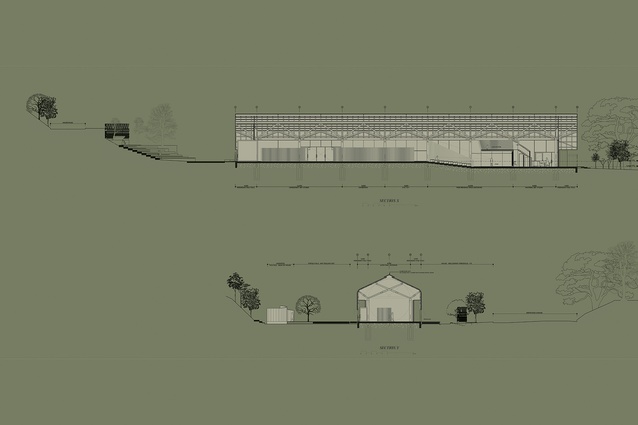
Fale cross-sections.
Mila Makasini explains the ways in which architecture, people, place and culture are inseparably intertwined in his 2025 Resene Student Design Award-winning Lalava’i Fonua.
The premise of this project is the Tongan diaspora of Aotearoa, who face disconnection with their fonua (people, place, culture). This body of works asks: How can architecture deepen cultural value both temporally and spatially? How can it tend to a generation of individuals who look to navigate the tensions between the stability founded in our traditional ancestral pasts and the boundless opportunities presented by our unknown future? By leveraging architecture, a building is elevated from a static vessel to a living, breathing, dynamic community member, effectively engaged in transforming and transmitting culture.
Lalava’i Fonua poses that a fale designed as an active participant in cultural practice catalyses identity formation and intergenerational knowledge transfer. Through lalava (lashing) traditional values with contemporary innovation, the architecture connects. It empowers the diaspora community: ascending ‘up’ from our ancestral roots, as thriving descendants of the future, firmly grounded in this new place.
Sited on the green town belt of Ōtepoti, this fale integrates the Tongan art typologies of nimamea’a (handicrafts), faiva (performance) and tufunga (material arts) in celebration, forming dedicated, considered spaces for said practices to be passed on to future generations in a cultural continuum. Contextually, the site — on the corner of Serpentine Avenue and Māori Road — sits on a transitory threshold between the city and the hill suburbs, shrouded on two sides by dense native bush.
The architectural response itself, through form and process, reflects cultural practices. No conventional material motifs are ‘applied’. Overarching theoretical tenets of non-linear tā (time) and vā (socio-spatial relationality) form a critical lens to analyse the fale Tonga vernacular architecture, which is synthesised into a set of 10 tectonic and aesthetic archetypes. These derive key notions from which identifiable architectural themes organically manifest. The fale is principally formed of native timber, steel, basalt stone, clay earth, and profiled metal: robust, authentic materials that not only befit the locale but also resonate with the fale’s origins.
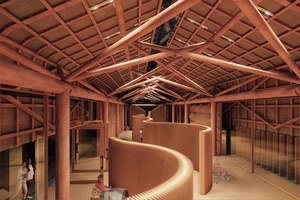
In plan and section, the blueprint of the classical fale Tonga is evident, yet not dogmatically prescriptive. A primary structural quadrant of pou (posts) is modulated along the plan, forming the super-structure. From these pou, a series of cranked beams and struts expands, forming a lofty roof volume supporting two distinct planes. Typically, the apex is terminated with a tau’olunga (ridge plate); here, the ridge plate is boldly omitted. In its place, a glazed roof aperture connects the fale to langi (sky), which is one with Moana (ocean), binding the fale — deep in the southern whenua of Aotearoa — back to its origin fonua of Tonga. The ‘Moana connection’ is promoted as supreme above all.
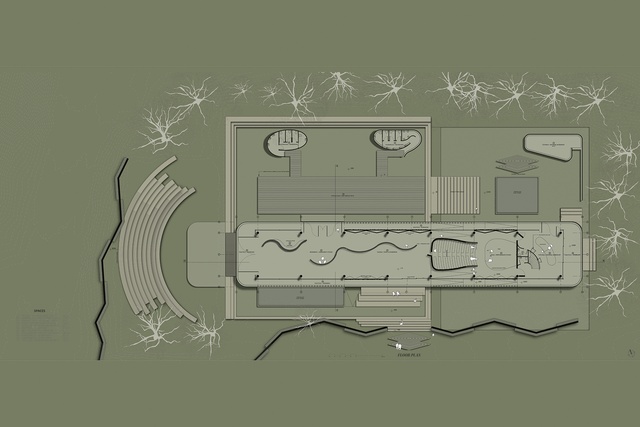
Within the fale complex, a series of handicraft studios, performance spaces and material art workshops are demarcated through temporal screening elements. These vary in permeability, responding to the respective acoustic, visual and tactile rationale of each function. A stair core elegantly houses workshop storage within its flights. Cantilevering from this core is an elevated platform, which dually defines a performance space in its silhouette below and houses teunga faiva (performance attire) within its walls above. This is a subtle reference to the classical fale
Tonga, where our most precious fala (fine mats) were stored in the fata (attic space) above.
To the hihifo (west) of the fale are tiered platform seats and an outdoor performance space. To the hahake (east) end of the fale is the native forest, from which materials would be harvested for crafting. Typically, the vernacular of the fale Tonga calls for curved ovoid ends. This element
is reinterpreted, not through built form but through people and landscape. Architecture, people, place, and culture are inseparably intertwined — Lalava’i Fonua.