Design + realisation
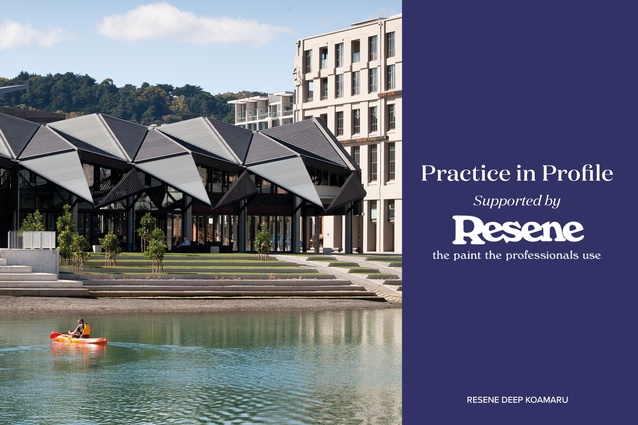
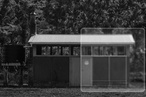
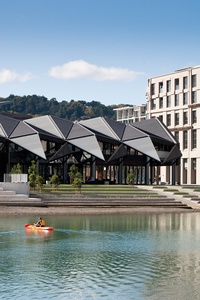
Wharewaka on Wellington’s waterfront.
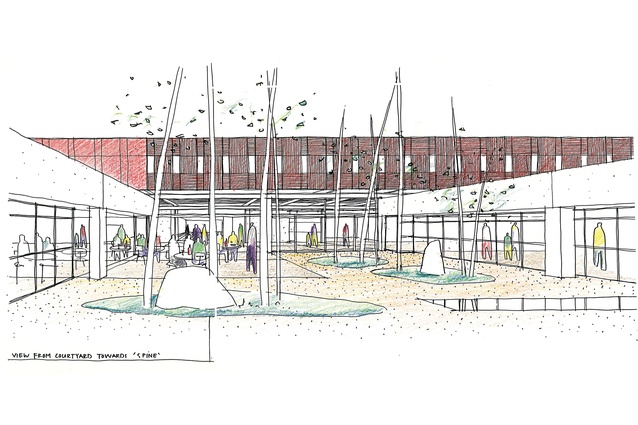
Pātaka, concept design sketch.
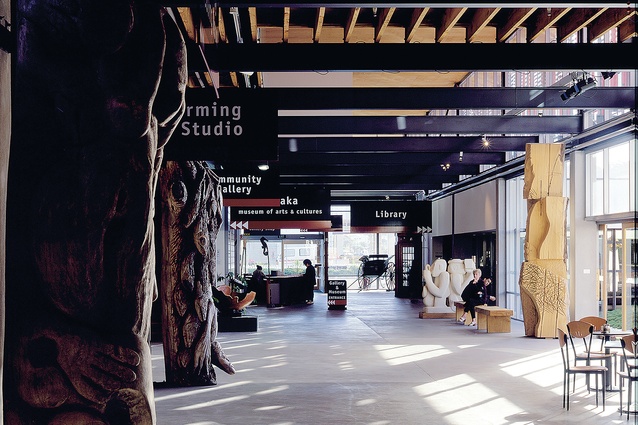
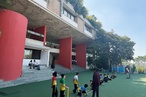
Pātaka, Norrie Street entrance and internal street.
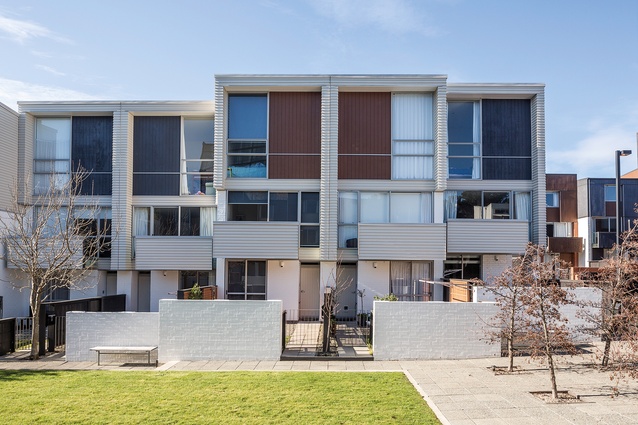
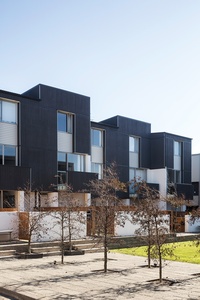
Altair townhouse development, Newtown.
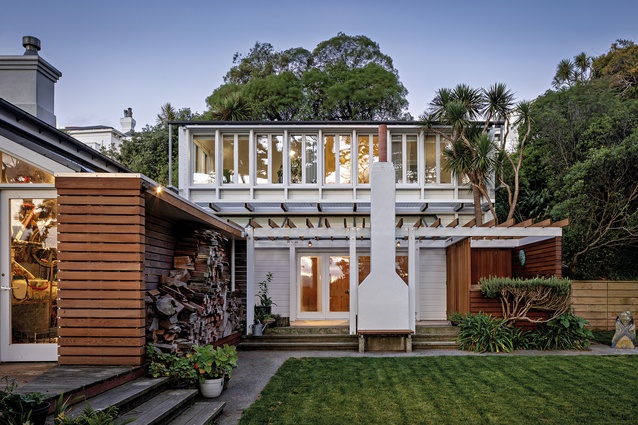
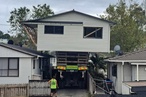
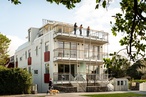
Grass Street house extension in Oriental Bay.
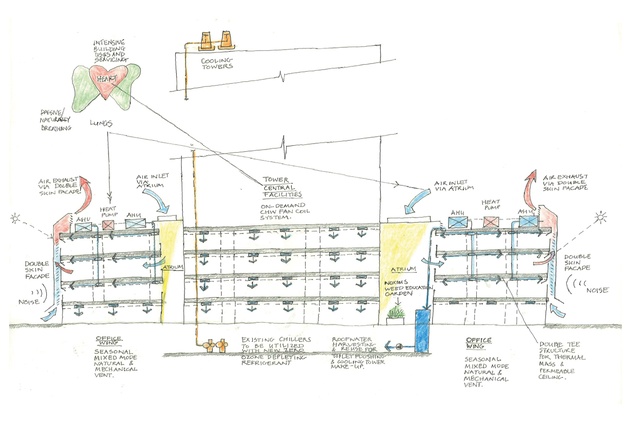
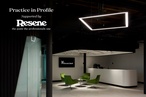
Conservation House, sustainability concept.
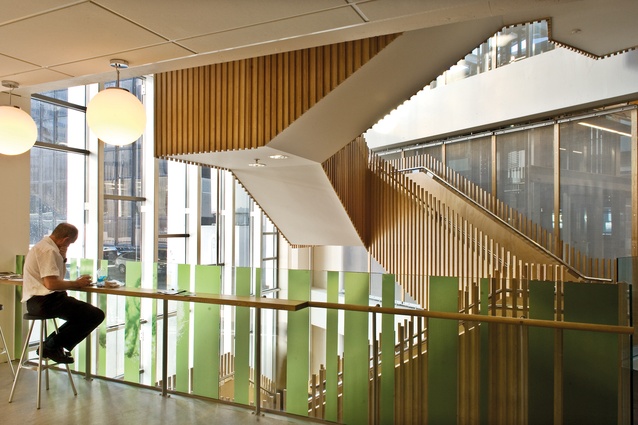
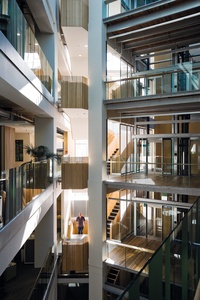
Conservation House, internal stair.
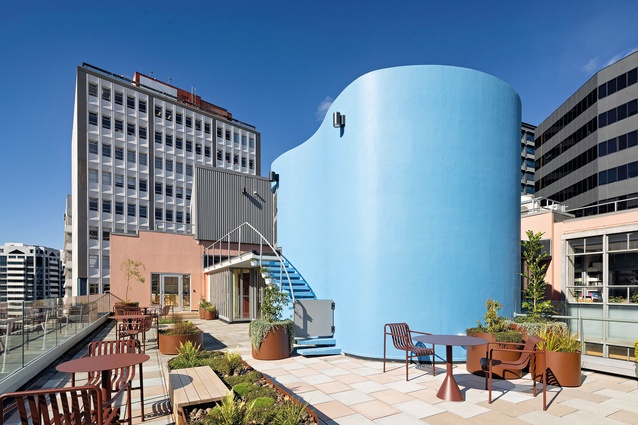
Massey House, refurbished roof terrace with curved lift overrun.
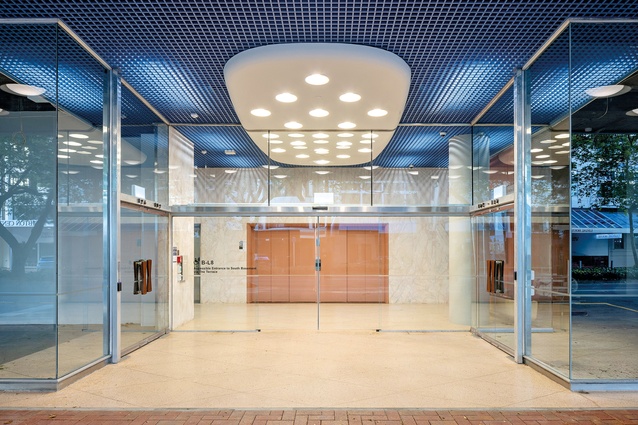
Massey House, refurbished Lambton Quay entrance.
In the latest instalment of Practice in Profile, supported by Resene, Belinda Tuohy discusses the formation and continuity of architecture+ and its founding values — of a commitment to collaborative relationships with clients, coupled with the responsibility to design for future users, the community and the planet.
Reflecting on the past 32 years of architecture+, it’s clear that much has changed and evolved. What is perhaps more striking, however, is what has remained constant.
Having crossed paths while working at Structon Group in the 1980s, founders Allan Wright, Stephen Poulopoulos and Stuart Gardyne came together in 1994 as sole practitioners under the umbrella of the architecture+ brand. The practice emerged at a time when the market was quiet so members of staff were engaged as contractors, allowing labour to flex with workload. Allan, Stephen and Stuart each retained their own clients and projects, managing invoices and wages independently, while benefiting from collaboration and shared support. Over time, it became clear that each brought different yet complementary skill sets, and what began as a pragmatic arrangement endured until the practice was formally restructured as a company in 2008.
When I first turned up to my job interview in 2002, I had no idea how unique architecture+ was in its practice model, or how much that shaped the culture and work of the office. It was my first job and I knew no different. Fortunately, I love systems so I quickly learned the mechanics of invoicing, tax and budgeting leave. It was a steep introduction to the business side of practice – experience I would later come to value greatly as a director.
The contractor model meant there was no hierarchy in our structure, and we never felt the need to over-embellish with a proliferation of titles or specialist roles. It’s probably also why we’ve never been heavy-handed with marketing. Instead, we all share in the work and leave the projects to speak to our design values.
More than anything, though, it was the flexibility that came with this way of working that I came to value the most. While all staff members are now employees rather than contractors, flexibility remains embedded in our DNA. They continue to be remunerated on an hourly basis, allowing them to adjust their working hours to suit changing circumstances – caring for children or family, fitting in further study, taking time out for travel, and so on.
This commitment to a more egalitarian and flexible workplace has connected with my own values and, ultimately, led me to take on shareholding and directorship alongside colleagues Kirsty Chamberlain and Simon Gourley. The process of succession has been deliberately slow and steady. It is not about replacement or a takeover but about continuity of our founding values – of people, collaboration, realisation and responsibility.
PEOPLE
My first encounter with architecture+’s work was Pātaka Art + Museum in Porirua, which caught my attention while I was a student at Victoria University of Wellington’s School of Architecture in 1999. I have lived in northern Porirua most of my life and had observed the decline of Porirua’s Cobham Court as a locus for retail and civic activity, following the construction of the Kmart Plaza shopping mall. Pātaka was instrumental in re-establishing a civic and cultural heart in the city.
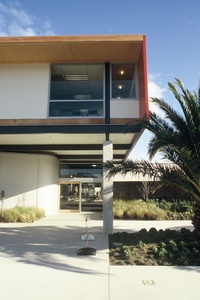
The design was organised around a two-storey spine inserted between the library and galleries, connecting dual entries from both the west and the east via an ‘internal street’. This simple approach to delineating space was to become a successful strategy for many future architecture+ projects, including Hutt City Council Civic Centre and the recently completed Te Āhuru Mōwai Community Hub Library in Feilding. The internal street allows differing functions on either side to operate independently yet benefit from their proximity to one another. The internal street is also an overtly public space in its own right, capable of hosting a wide range of activities, from cultural performances through to civic ceremonies.
The design of Pātaka was intentionally ‘regional’, responding specifically to its location, community and people. Materials are robust and simple — exposed timber joists, concrete floors and plywood. Red louvres along the north elevation are configured into a basketweave patterned screen — a strong iconic form recognisable across the city, representing the weaving together of both the community and the building’s many facilities. In these earlier years of the practice, cultural design expressions like this tended to originate from intuition and the happy coincidence of like-minded clients.
For Te Āhuru Mōwai, however, the cultural design process was more deliberate, and was supported by a strong commitment from Manawatū District Council. In the 25 years between these two projects, we have seen the integration of te ao Māori into architecture become more intentional and formalised, through the engagement of cultural advisors, advocates such as Ngā Aho and The Diversity Agenda, and resources like Te Aranga Māori Design Principles.
We have found that every client and iwi brings differing levels of experience and capability in this area, and the relationships between parties are often changing and evolving. This was certainly the case for Te Āhuru Mōwai, where a fragile council–iwi relationship resulted in a halt to engagement at several points along the design programme. Ultimately, it was shared values, rather than formal frameworks, that guided the cultural approach to design. In our work, cultural integration is not a separate exercise or moment of emphasis, but simply the result of working every day with care, good values and a genuine commitment to people and place.
REALISATION THROUGH COLLABORATION
We define architecture as design + realisation. For us, a design does not truly become architecture until the building is built. This requires a collaborative relationship with clients. Our approach is not arrogant — we don’t cling to our designs as the ‘right’ solution or dismiss the ideas of others. By genuinely considering our clients’ contributions, we have found we can more quickly arrive at a design that fits our clients’ needs, vision and budget.
This collaborative approach underpins our long-running track record of multi-unit residential projects. These developments are always shaped in close partnership with our developer clients, responding to changing market conditions and purchaser expectations.
Altair is one such project, comprising 70 townhouses on the old site of Athletic Park in Wellington. While addressing the need for higher density, the design focuses on fostering community, with the units arranged in nine blocks around two landscaped courtyards. Each block adopts a distinct material palette, and the façades push and pull in plan and elevation, giving individuality to each dwelling while helping to define outdoor living spaces.
Following completion of the concept design for resource consent, the site was acquired by another of our developer clients. While ownership changed, the commitment to the original vision remained, with construction staged over a four-year period to respond to fluctuations in market demand.
While collaboration is essential at the scale of multi-unit developments, it becomes even more personal in our work with private residential clients. We’ve enjoyed long-standing and repeat relationships with many of these clients and, for me, these projects are often the most reaffirming — particularly when end-users return to us for further additions or entirely new homes.
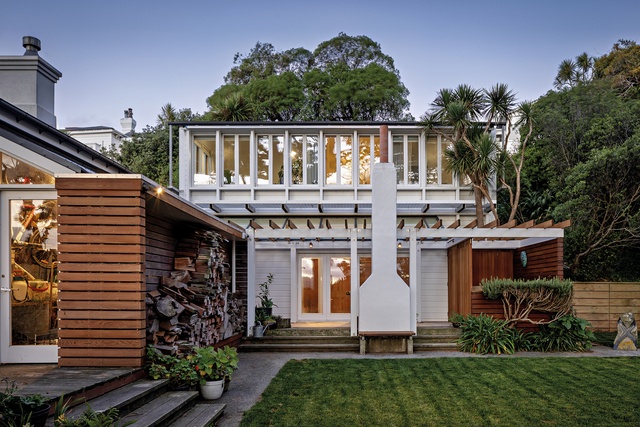
The recently completed alterations to a house on Grass Street, Oriental Bay, are one such part of a series of works for a return client. This house has been an evolving project for the owner for three decades, originating with a design for a sculpture plinth and landscape to the front garden. Over the years, we have designed an outdoor shed, a fireplace and a hot tub, and relocated the entrance. Most recently, we completed more substantial work to the house, adding a two-level bedroom wing that connects with the earlier garden works. The collaborative process of working in sequential stages has resulted not only in a cohesive outcome, but in an enjoyable experience and an enduring friendship.
Across all project types, it is collaborative relationships, rather than singular authorship, that determine whether or not a project progresses beyond paper.
RESPONSIBILITY
When approaching new projects, we believe we have the responsibility to design not only for the immediate client but also for future users, the community and the planet.
These values were at the heart of Conservation House head office for DOC, with a genuine commitment from the building owner, the tenant and the wider consultant team to produce a workplace that could serve as an exemplar for sustainability. This was before Green Star and carbon calculators were even a thing in New Zealand and, in many ways, this project paved the way for the wave in sustainable office accommodation that accompanied the government’s Govt3 programme from 2003 to 2009.
There was nothing pretty about the existing building — an abandoned 1980s’ cinema complex with deep floor plates and no natural light. As a young graduate, I navigated the maze of mirror tiles and frozen escalators in complete darkness with a torch, a tape measure and a fair degree of trepidation, documenting the building’s many caverns. Although it wasn’t an obvious contender for a green building, it was agreed that salvaging an existing structure was a great place to start.
The design solution cut into the concrete structure to create two full-height atria, producing a supremely good work environment with desking arranged alongside glazed balustrades. The atria also create the ‘lungs’ that allow the building to breathe with natural ventilation, drawing fresh air in from the rooftop garden, and exhaling it out through the new double-skin façades. It addressed all of the environmental categories that would find their way into the first release of Green Star NZ in 2007, from transport and ecology through to energy, water and materials. Ultimately, it was a shared commitment to designing responsibly for the future — more than any rating tool or calculator — that aligned the team around a common goal.
Rehabilitation of existing buildings is a particular theme for architecture+ as we strive towards more responsible design. As Carl Elefante succinctly put it in the National Trust’s Forum Journal in 2007, “the greenest building is… one that is already built”. But rehabilitating existing structures is not only about environmental responsibility — it is also about respecting our past and protecting our heritage for future generations.
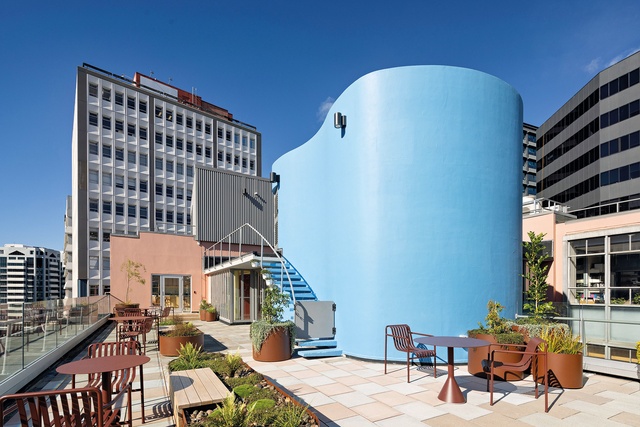
Recently, we completed the structural upgrade and refurbishment of Plischke’s Massey House on Lambton Quay for the same client. Although listed as an Historic Place Category 1 building, the interior had been assumed to be more recent and, therefore, had not been listed. Through countless hours of careful investigation and stripping back accumulated layers of finishes, much of the original fabric was rediscovered — including a patchwork of coloured lino flooring, playful Formica wall linings and a surprisingly lively paint palette. Restoring this character did more than honour Ernst Plischke’s architectural legacy; it also returned life and vibrancy to a somewhat tired and neglected end of Wellington’s Golden Mile.
There is much to be optimistic about in the rapid advancement of sustainable building technologies. But, alongside the excitement surrounding innovative new green buildings, we need to give equal attention to how we care for, adapt and extend our existing building stock. In a 2008 interview, Stuart articulated this balance through the idea of foreground and background — a way of thinking that continues to shape our approach: “Some architects want to show every idea they have ever had. Buildings need to recognise the part they have to play in the city. They can’t all be the star attraction. In an urban sense, we like to think our buildings are good neighbours — we are not interested in improving our lot at the expense of others.”
architecture+ is recognised for architecture that is deliberate, rigorous and deeply attuned to its setting. Known for measured material palettes and refined detailing, the studio works across residential, civic and commercial projects at all scales. Our ambition is to create work that strengthens communities – architecture that is efficient yet precise, uplifting and enduring.